The journey to Morocco began with a crossing, not just of borders, but of states of being. I arrived in Casablanca a day ahead of my family, carrying the dust of Kenya and a weariness that had settled deep in my bones. Under the weather and craving stillness, I retreated into the sanctuary of my hotel. There, a hot shower, a quiet meal of soul-warming Moroccan spices, and a heavy dose of vitamin C served as my initiation. I crashed into a deep sleep, waking the next morning refreshed, the air of North Africa finally beginning to feel like home.
When my husband, Eric, arrived the following morning, we had a few precious hours before the children landed in the late afternoon. We took a ride into the heart of Casablanca to witness the Hassan II Mosque, a structure that defies the boundaries between the earthly and the divine. Perched proudly over the Atlantic Ocean, as if the building itself were an extension of the sea, it was commissioned by King Hassan II, who wished for the “throne of God to be built upon the water.”
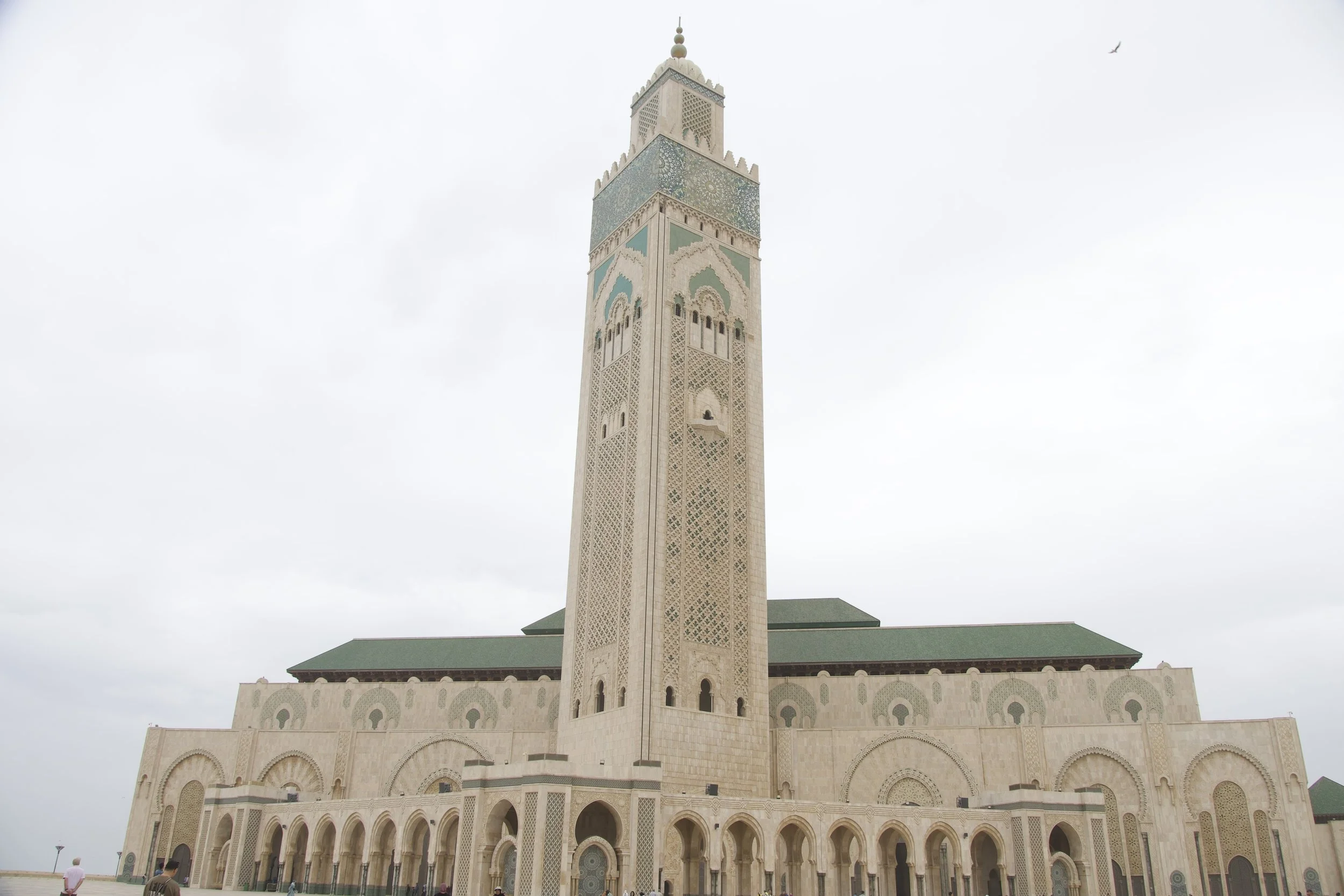
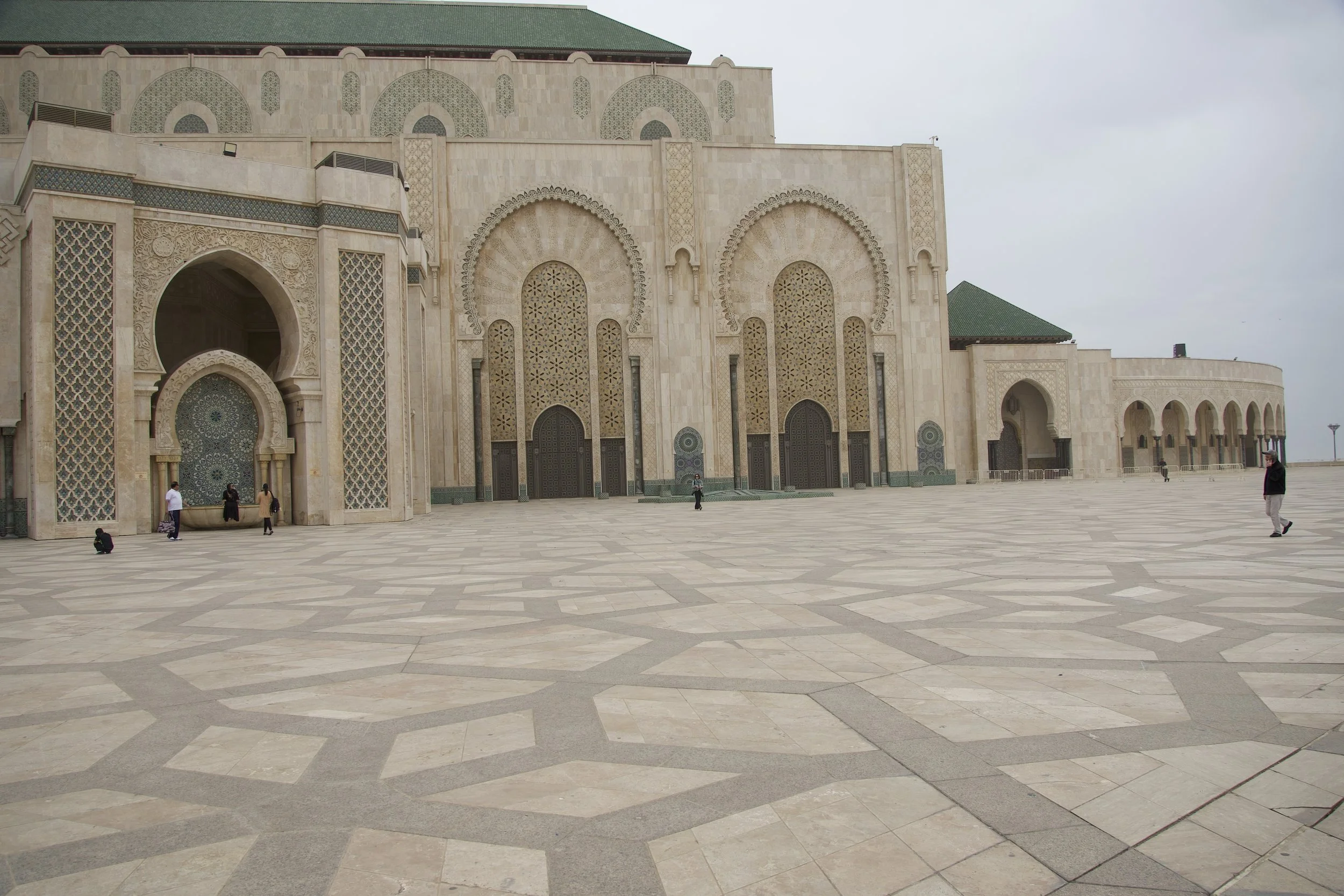
The artistry is staggering. I found myself tracing the Zellige tilework with my eyes, mesmerized by the hand-chiseled geometric mosaics that draped the walls like ceramic lace. Every inch, a striking impression of bold Moroccan art. We ended our afternoon at Dar Dada, a local recommendation where I had my first true “taste” of the country: a succulent lamb tagine with plums. The sweetness of the fruit against the savory, slow-cooked meat was absolutely delicious, a perfect introduction to a land that thrives on the harmony of extremes.
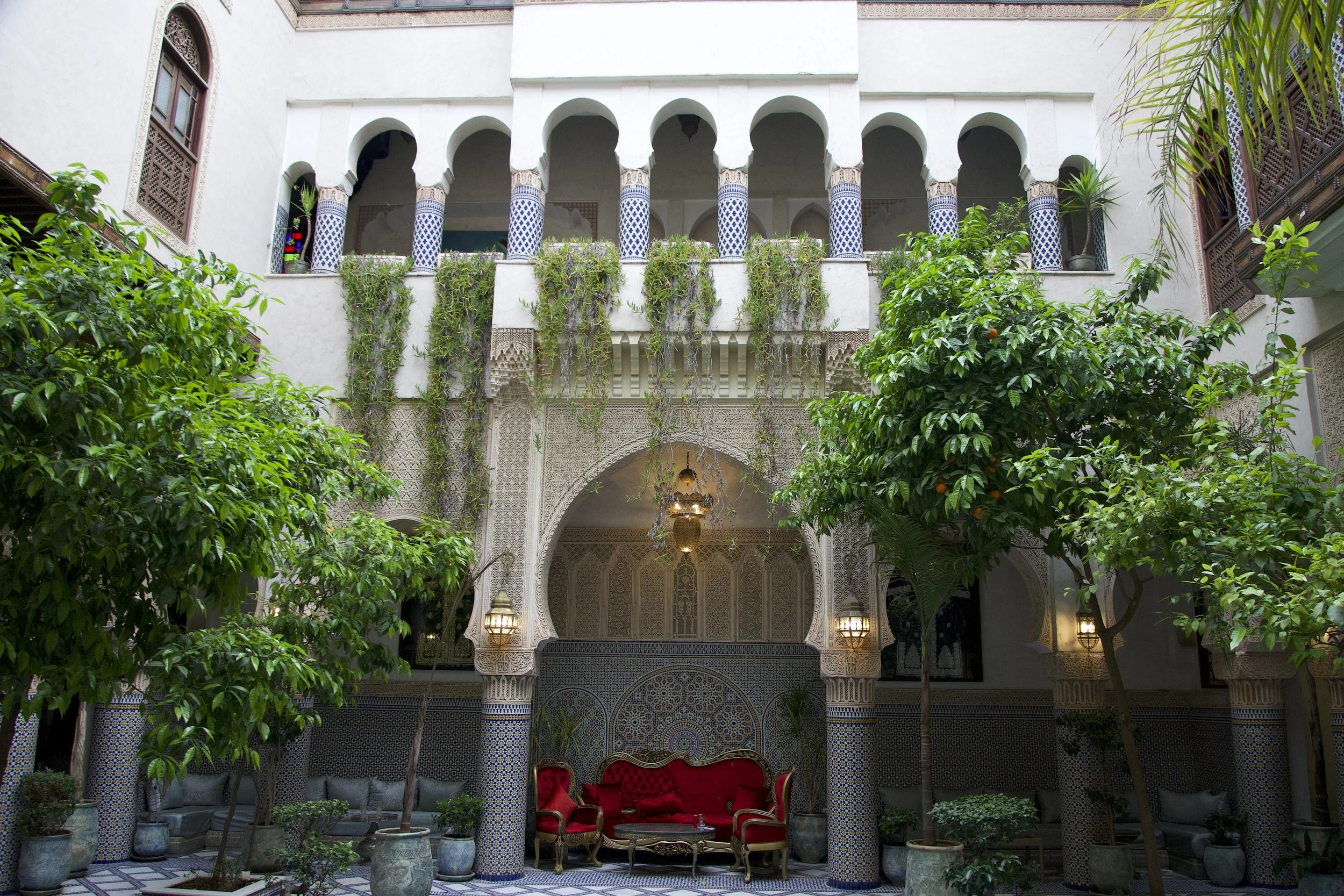
By the time we gathered the children and headed toward Fes, we were exhausted and fell into a collective slumber in the van, waking only when we reached Riad Salam Fes. We were all entranced, as it was easily the most exquisite sanctuary we have ever inhabited. The riad, with its lush indoor gardens and towering ceilings, felt less like a hotel and more like a preserved dream from the 17th century.
The next day, we entered Medina, the ancient, walled city. Our guide, a man of quick wit and profound knowledge, led us through a labyrinth where time seems to have stood still. In the West, we have largely lost the visceral connection to how things are made, but in Fes, the maallem (master craftsman) is still the heartbeat of the streets. We watched artisans hammering brass, weaving vibrant textiles, and working leather with techniques passed down through millennia. It felt as though we were walking through a living museum, yet it was pulsing with modern life.
Our journey then turned southeast, led by our driver, a man whose kindness was a constant comfort. He didn’t just drive, he looked after the road, stopping to check on stranded drivers as if they were kin. We passed through Ifrane, the “Switzerland of Morocco,” and the ancient cedar forests where Barbary apes stood guard, before the landscape began to shed its greenery for the scorched gold of the desert.
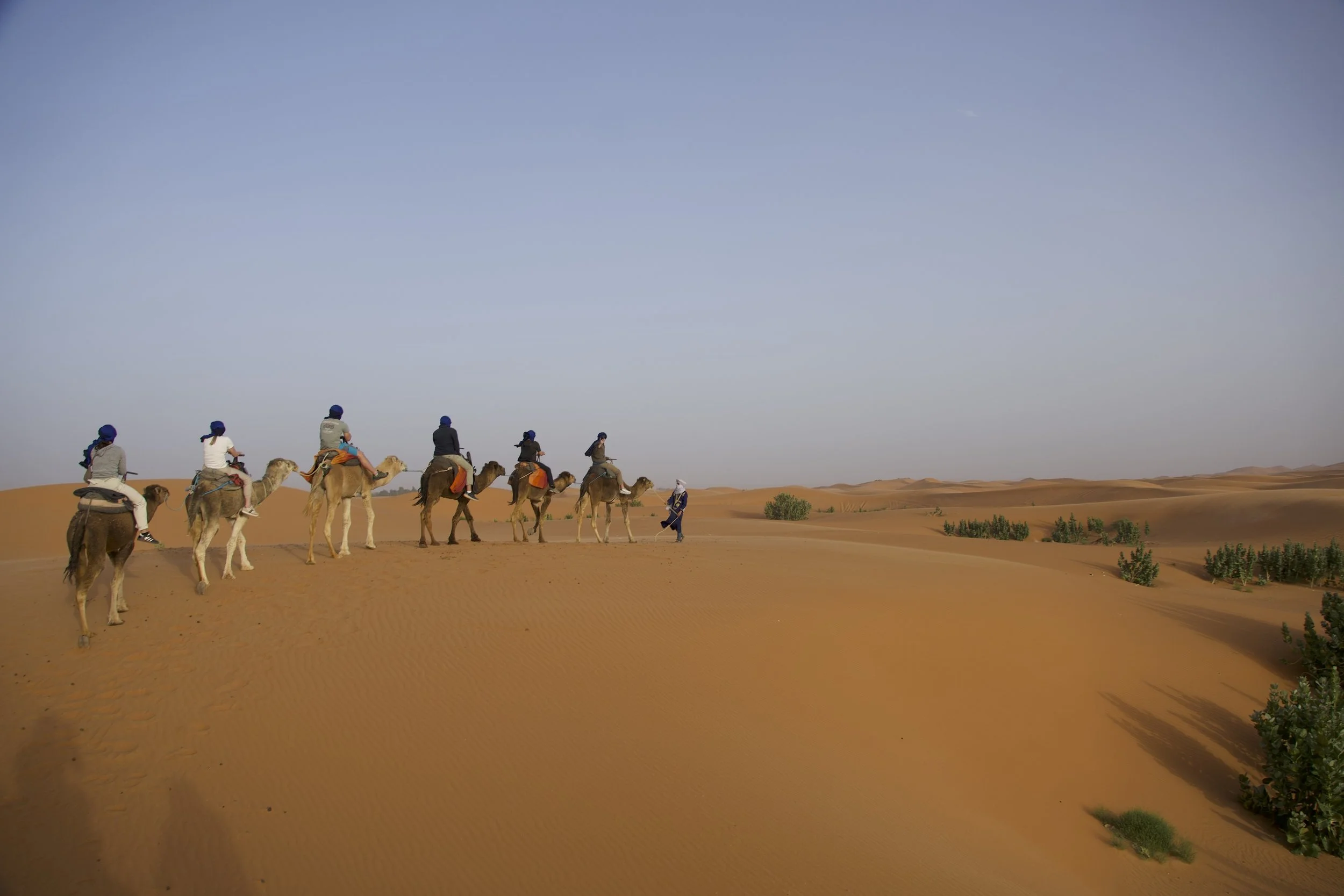
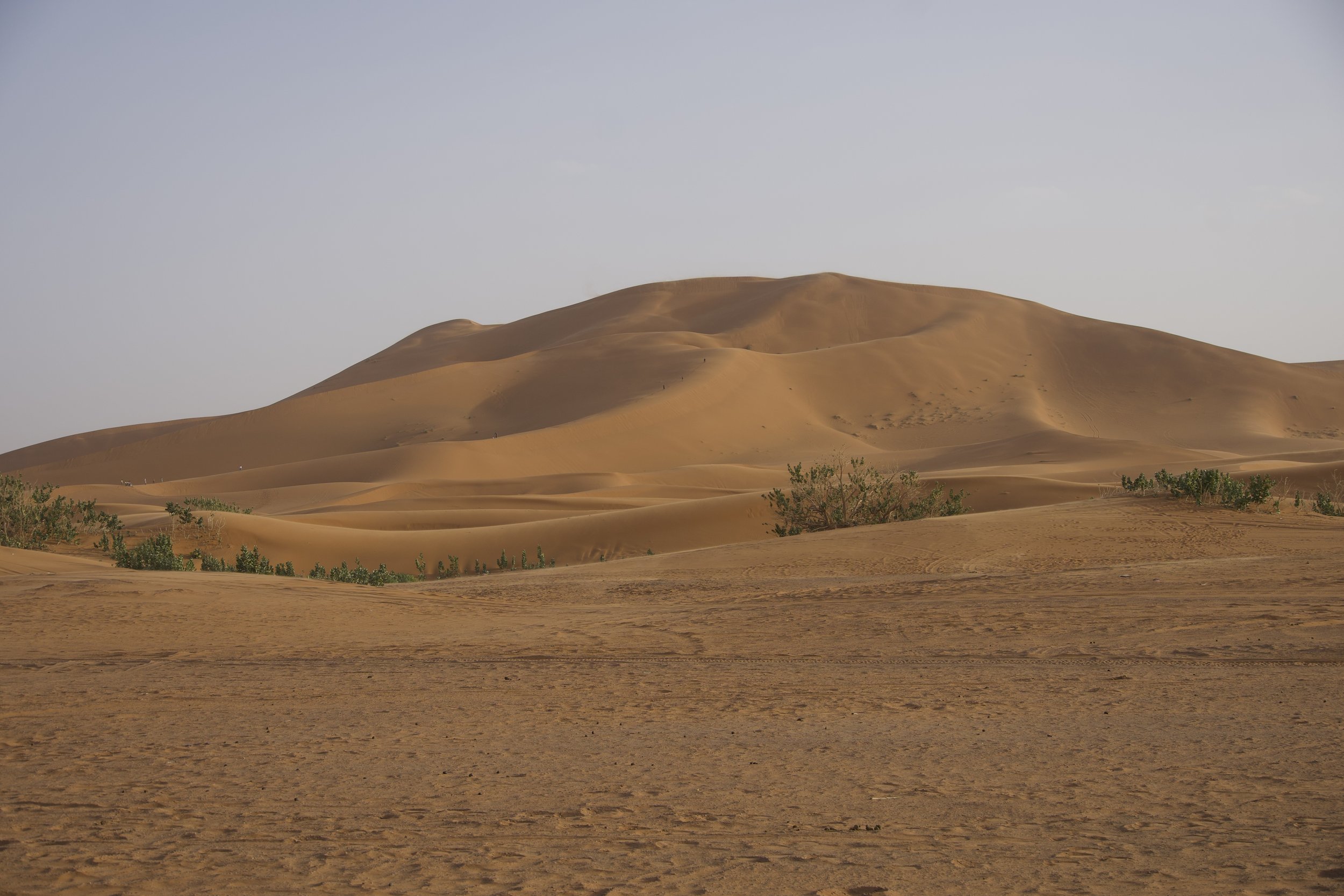
Arriving at the Sahara, we traded our van for camels. As we rode into the sunset toward our luxury camp, I felt a shift in my spirit. The word Morocco itself finds its roots in the Berber Mur N Akush meaning The Land of God. Standing atop a massive dune as the wind whipped sand against my skin and into my eyes, looking at the camels silhouetted against a setting sun, I felt transported to biblical times.
In that vastness, I felt small, yet profoundly connected. Like the “sands of time” we so often speak of, I was reminded that we, too, are fleeting. I looked at my family, my husband and children by my side, and felt immense gratitude. The desert, which has stood for millennia, reminded me of my mortality. What legacy will I leave? What stories am I crafting today? In that moment, the answer was clear: I choose to spend my “now” deepening these ties, experiencing life as if today is all I have.
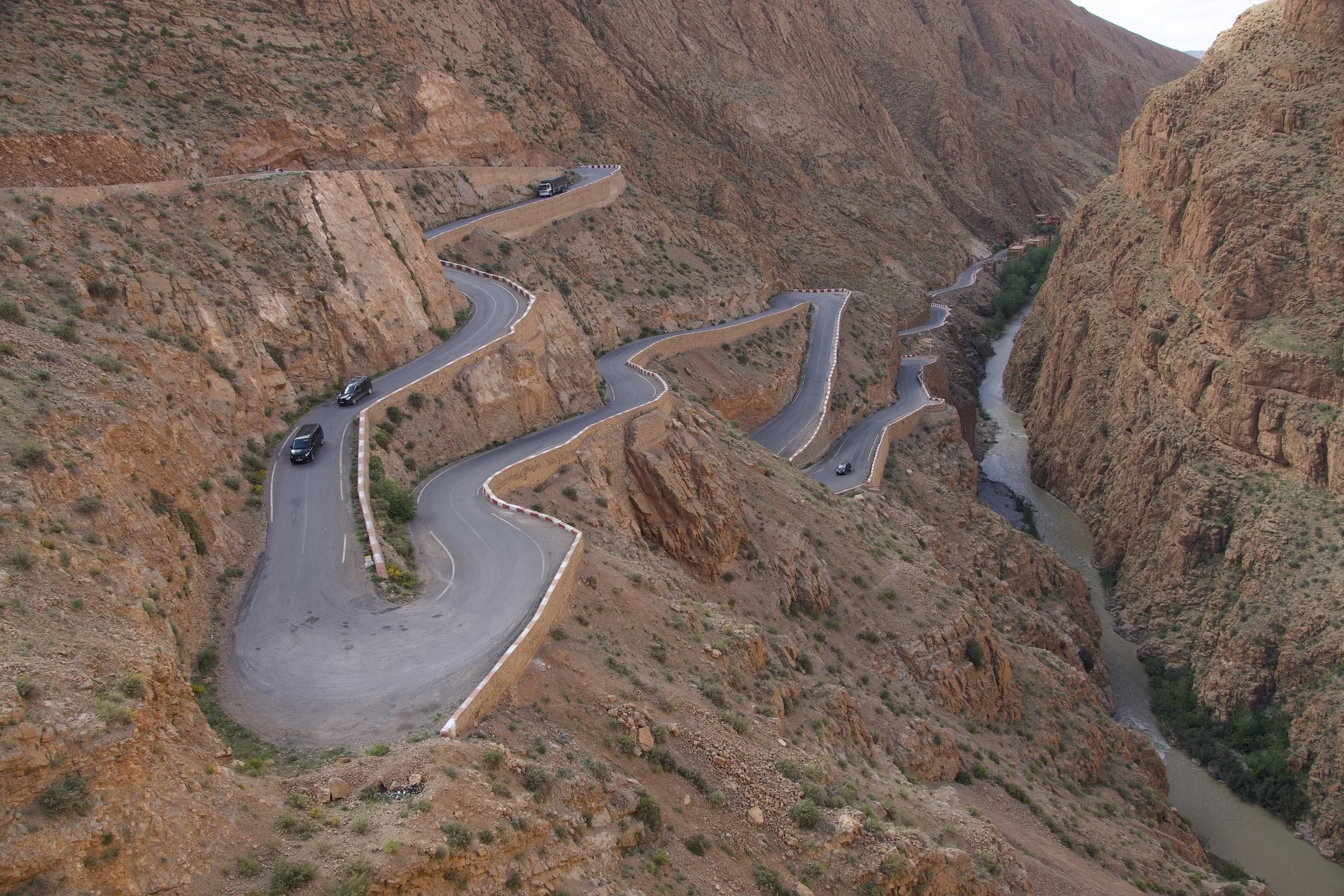
Morocco is a land of startling contrasts. We moved from the sun-scorched Sahara to the Todra Gorges, where towering limestone canyon walls rose like cathedrals around us. We followed the “Road of a Thousand Kasbahs,” passing through the Dades Valley and the fortified village of Aït Benhaddou. I was struck by how the architecture mirrors the earth. The homes, built of clay reds and dusty pinks, seem to grow out of the mountainsides. These are the oases of Morocco, ribbons of emerald green fed by ancient springs that cut through the barrens. It is a layered ecosystem where date palms, olives, and figs thrive in the shade, a testament to a culture that has learned to bloom in the mouth of the desert.
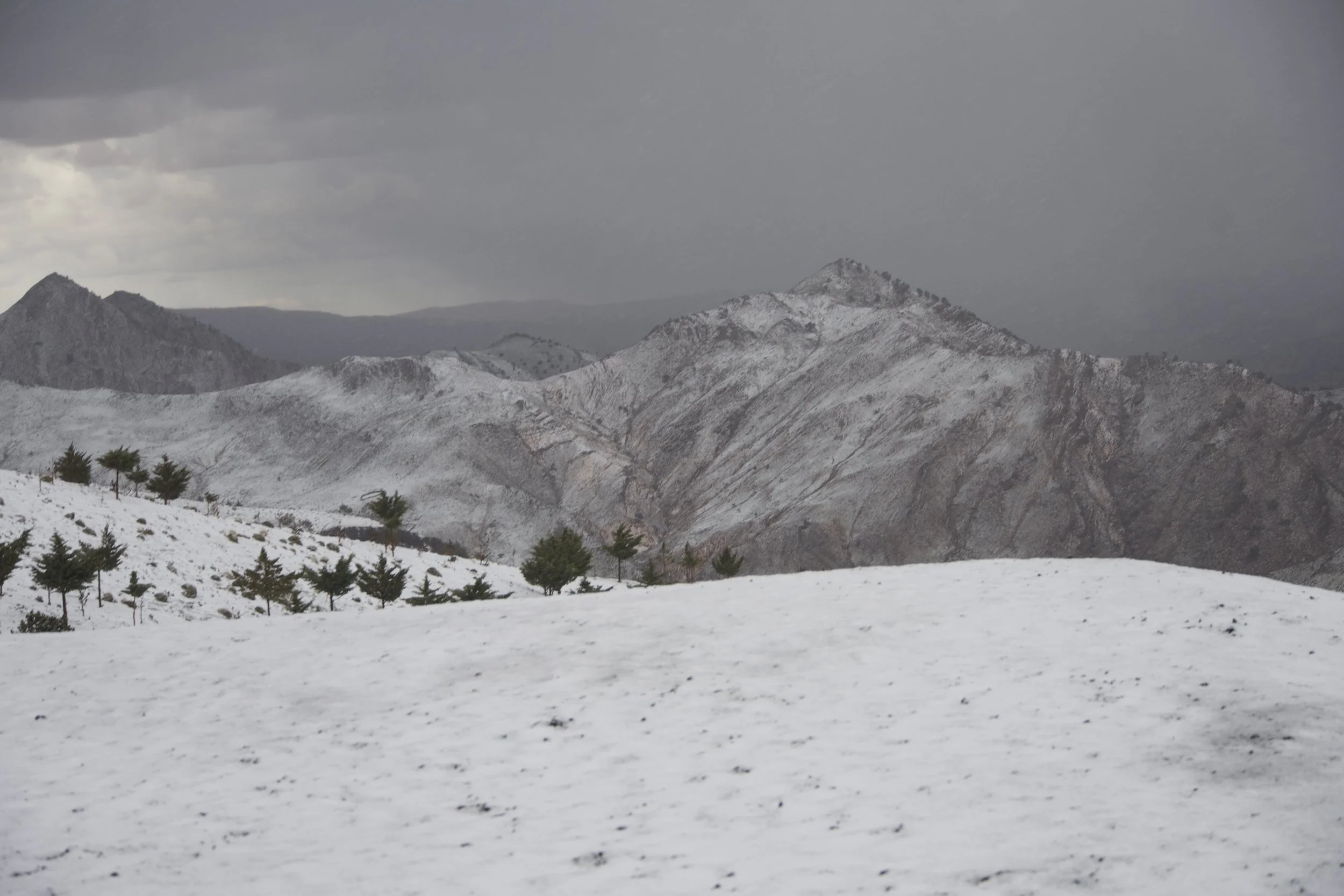
As we climbed the High Atlas Mountains toward Marrakech, the landscape shifted once more, proving its reputation for extremes. We ascended the majestic Tizi n’Tichka Pass, reaching heights of over 2,200 meters. The desert heat was a distant memory as sleet and rain began to lash against the van. We stopped at the summit, stepping out into the biting, freezing cold to take in this breathtaking scene. Shivering, we looked out over the rugged peaks, the clouds obscuring the Berber villages built into the rock. It was a stark, magnificent reminder of the mountain’s beauty and power, standing there in the chill before descending toward the valley.
Our final stop was Marrakech, the “Red City.” Our guide, shared a perspective that shifted my understanding of the land. He spoke of his people, the indigenous Amazigh — a name meaning “free people.” He explained how the term “Berber” was a foreign label, often used pejoratively by occupiers, and how they are now reclaiming their rightful name and heritage.
Walking through the Marrakech souks, I felt the “ghosts” of the past. The craftsmanship here, the intricate metalwork lanterns and the scent of vegetable-tanned leather, felt like a silent rebellion against colonization. Morocco does not merely absorb foreign influence; it “Moroccanizes” it, wrapping it in its own ancient traditions until it becomes something entirely unique.
We ended our journey with a sense of awe. Six days was merely a glimpse, a “taste,” of a country where the past is so seamlessly woven into the present. It was an ‘epic’ road trip, as proclaimed by my children. A week of card games during breaks, feasts of olives and fresh bread, and quiet reflections overlooking vast valleys.
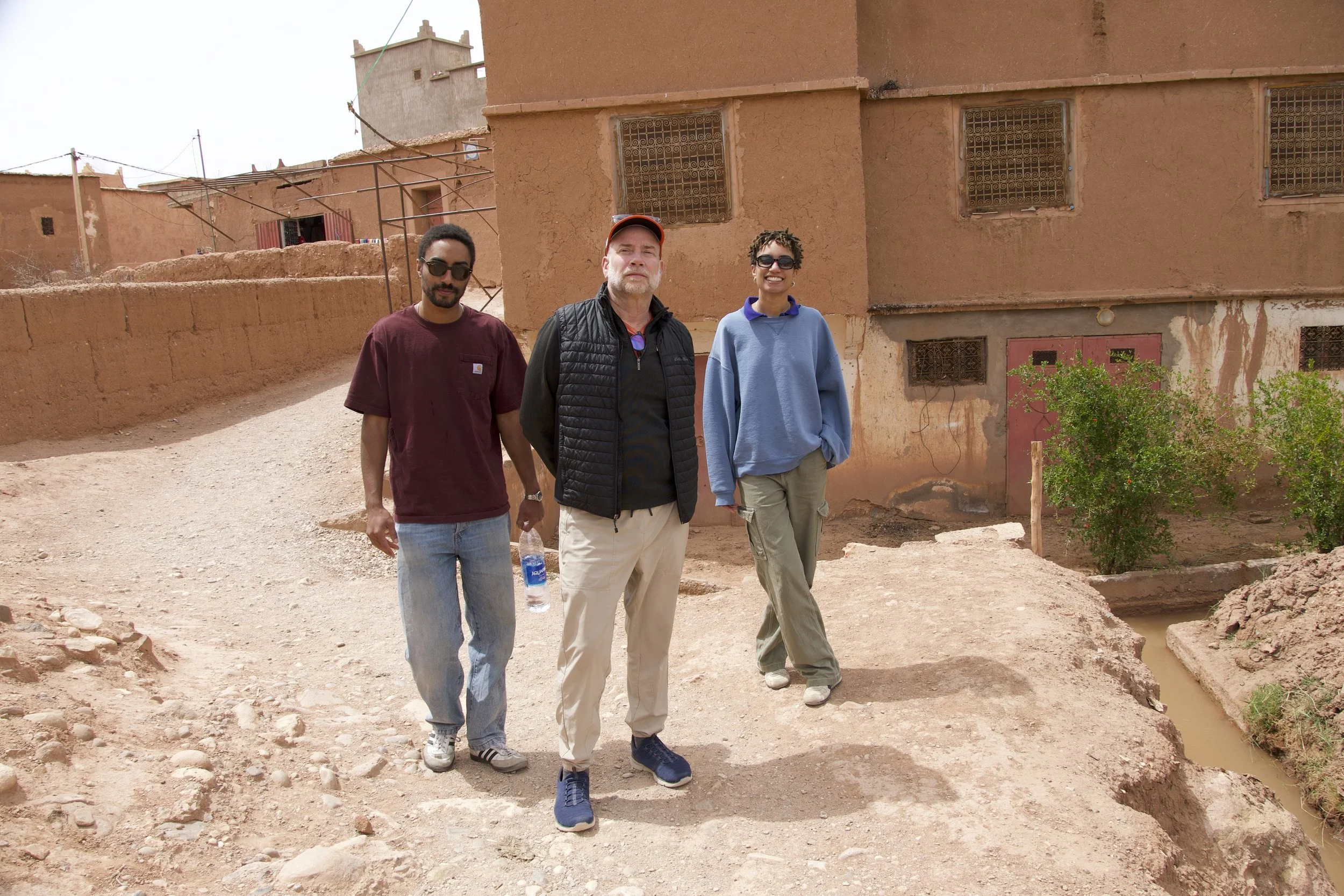
I am writing this now from Athens, where a new story unfolds, but a piece of my heart remains in the Land of the Gods. I miss my children, who are now safely back in New York, but I know we carry the same stories home. We tasted the tagine, we felt the desert wind, and we saw the hand of the craftsman in every stone. There is so much more to see and learn from Morocco and six days is not nearly enough.
Inshah-Allah (God willing,) We will return.
Footnote: The tour company that we used for our private tour of Morocco is called Deep Morocco. We were extremely pleased with the service we received and the hospitality of our guides and driver.
Thank you for reading! Please comment, share and clap. Would love your feedback.