I arrived in Ireland with a heart full of anticipation, ready to reunite with a friend I had not seen in forty years. I’ve always wanted to visit Ireland, as I have heard so much of the country’s beauty, and was looking forward to the trip. Reuniting with Veronica was instantaneous. When we saw each other, those four decades of separation vanished. We picked up exactly where we left off, a testament to the special phenomenon of New Era, the school we attended in India. As children sent far from our families, we forged a sisterhood that transcended racial and religious lines. We were family then, and seeing her now was like seeing a sister I had stayed in touch with only through messages and video chats. Meeting Veronica’s family and spending time with her grandson, Gabriel, a soulful four-year-old, completed the circle; her family became mine. Today, we have grown children older than we were when we parted in high school.
On my first evening, we went to downtown Belfast for authentic Ethiopian food. Surrounded by the aroma of injera and spices, I noticed an influx of immigrants in the area. Veronica shared that many are experiencing discrimination, a heartbreaking irony in a land that knows the weight of oppression so well.
The first lesson Ireland taught me was practical: Northern and Southern Ireland are two different nations. I realized only a day before leaving Italy that flying into Belfast meant entering the UK, requiring an Electronic Travel Authorization (ETA). Belfast is a city where history is worn on its face. Driving to the restaurant that first evening, the city felt grim at first, marked by its muscular, Victorian seriousness and the visible scars of industrial decline and what they refer to as "The Troubles"—the 30-year-long conflict from long-standing disputes over discrimination against Catholics. That conflict left the city divided by towering barriers and marked by political murals: vivid, sometimes haunting depictions of paramilitary figures, hunger strikers, and historical and current grievances. In the neighborhoods of Belfast, stories of trauma, conquest, and segregation continue to haunt the nation, written on the dark walls of buildings in a stark contrast to the colors I had just experienced in Italy.
The following day, the sun came out, and I was told that I had brought the sunshine. I appreciated the warmth, because the night I arrived was much colder than I had anticipated. I had not packed well for Ireland’s weather. We immediately drove to a store on the way to Veronica’s home to purchase a warm "jumper," the Irish term for a thick sweater.
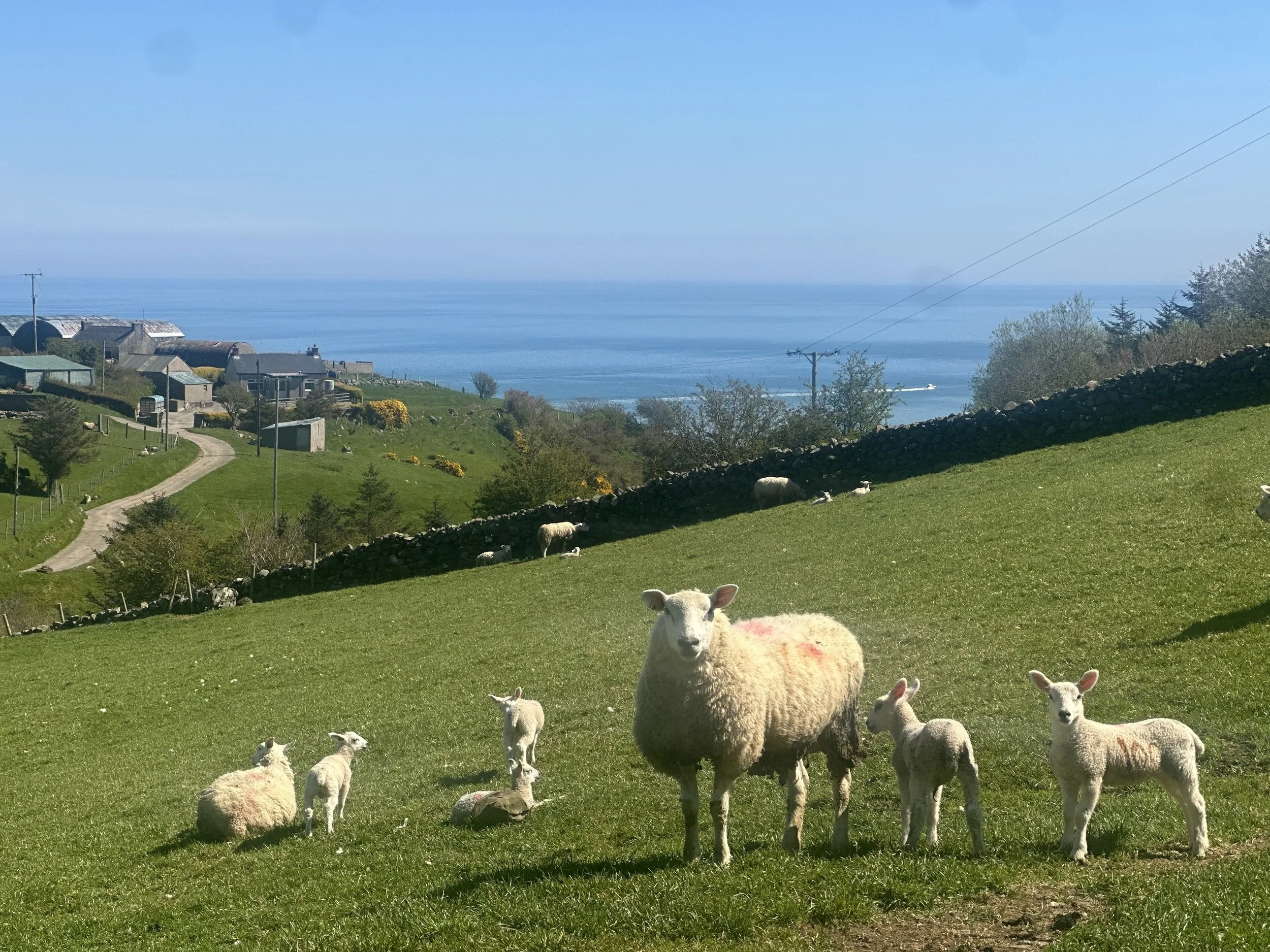
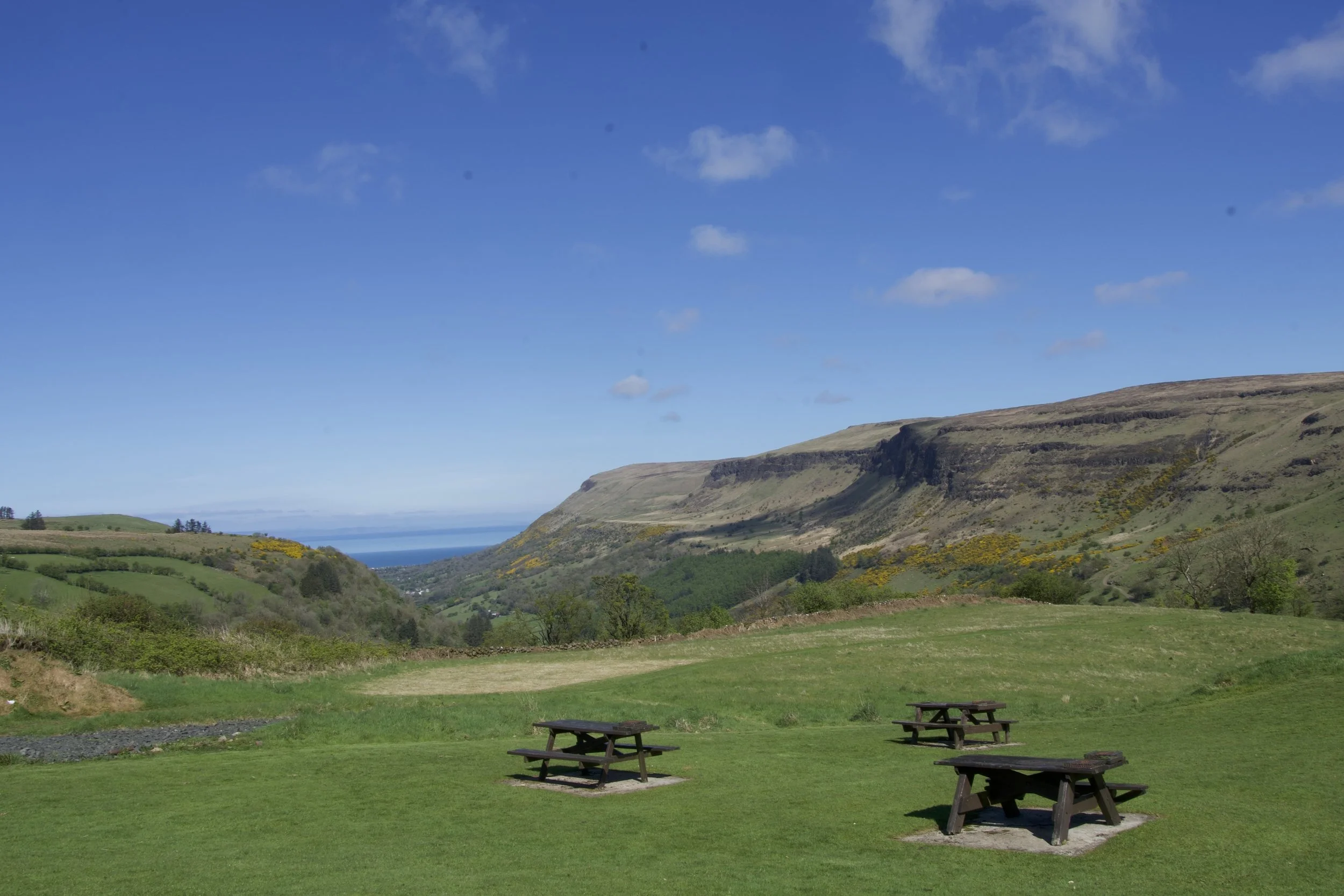
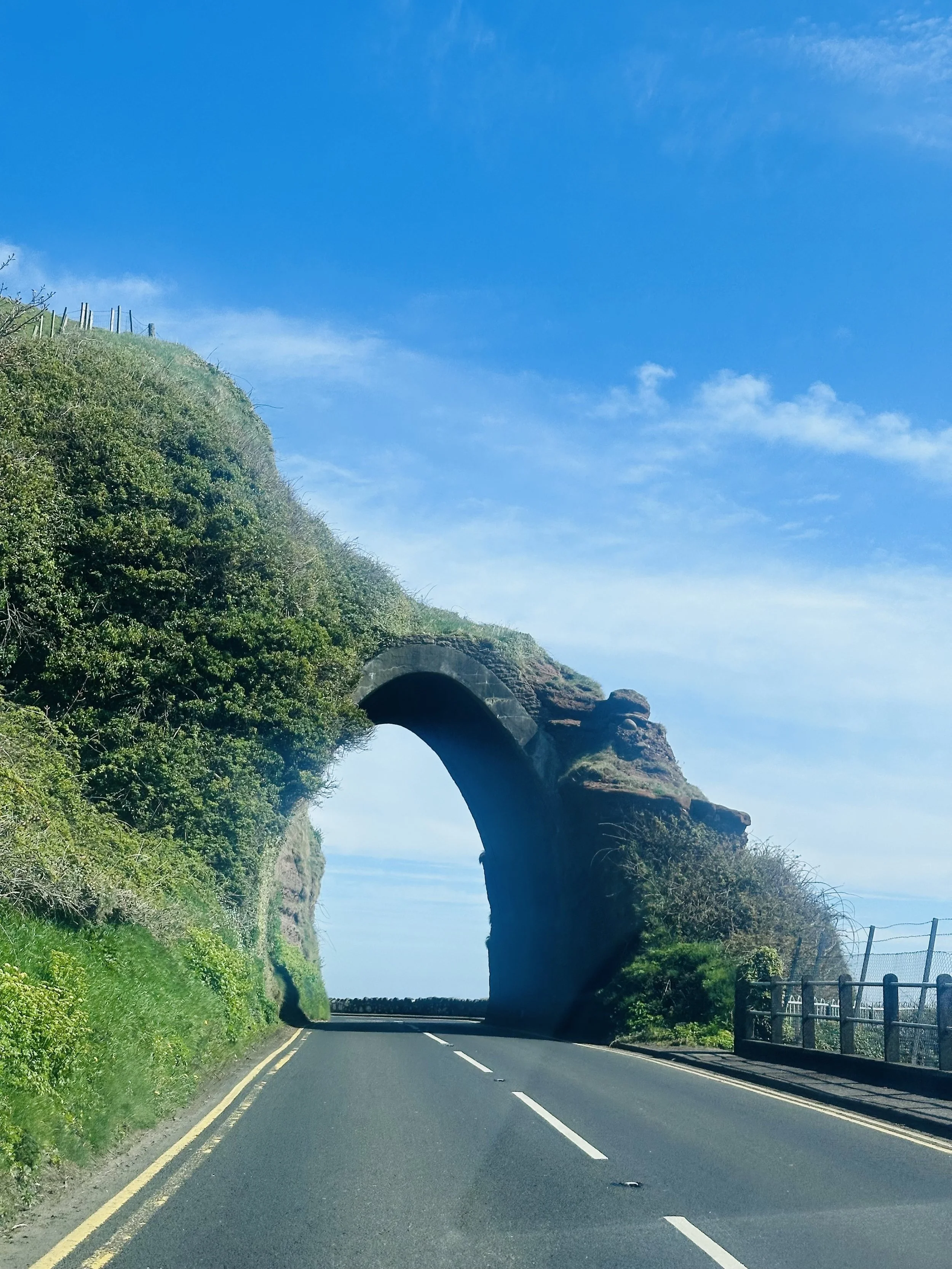
With my new jumper in tow, the following day we drove along the Glens of Antrim. The landscape offered a sharp contrast to the city. Along the Glens of Northern Ireland, the countryside is a moving painting of hills and valleys—emerald green fields divided by stone walls and floral bush hedges, where one could imagine fairies living in the mosses. Sheep were scattered like white brushstrokes across the slopes. As we began our journey where the Irish Sea meets the Atlantic in a spectacular collision of grey, blue, and green, the car became a vessel for our shared stories of four decades past. We stopped at Cushendall beach, where we spent an hour walking along the shoreline. Gabriel rolled up his pants and risked his feet in the bracing, cold water, throwing rocks and walking barefoot, reminding me so much of my own son in the New England summers.
I asked Veronica why the hills were so barren of trees, save for the occasional pine plantation, and learned that Ireland was once covered in oak and hazel, but centuries of clearing for farming, shipbuilding, and grazing have left the land open. The emerald beauty we admire is actually a landscape of deforestation. It felt like a metaphor for the land itself, a landscape of long-term exhaustion that mirrors the scars of the people.
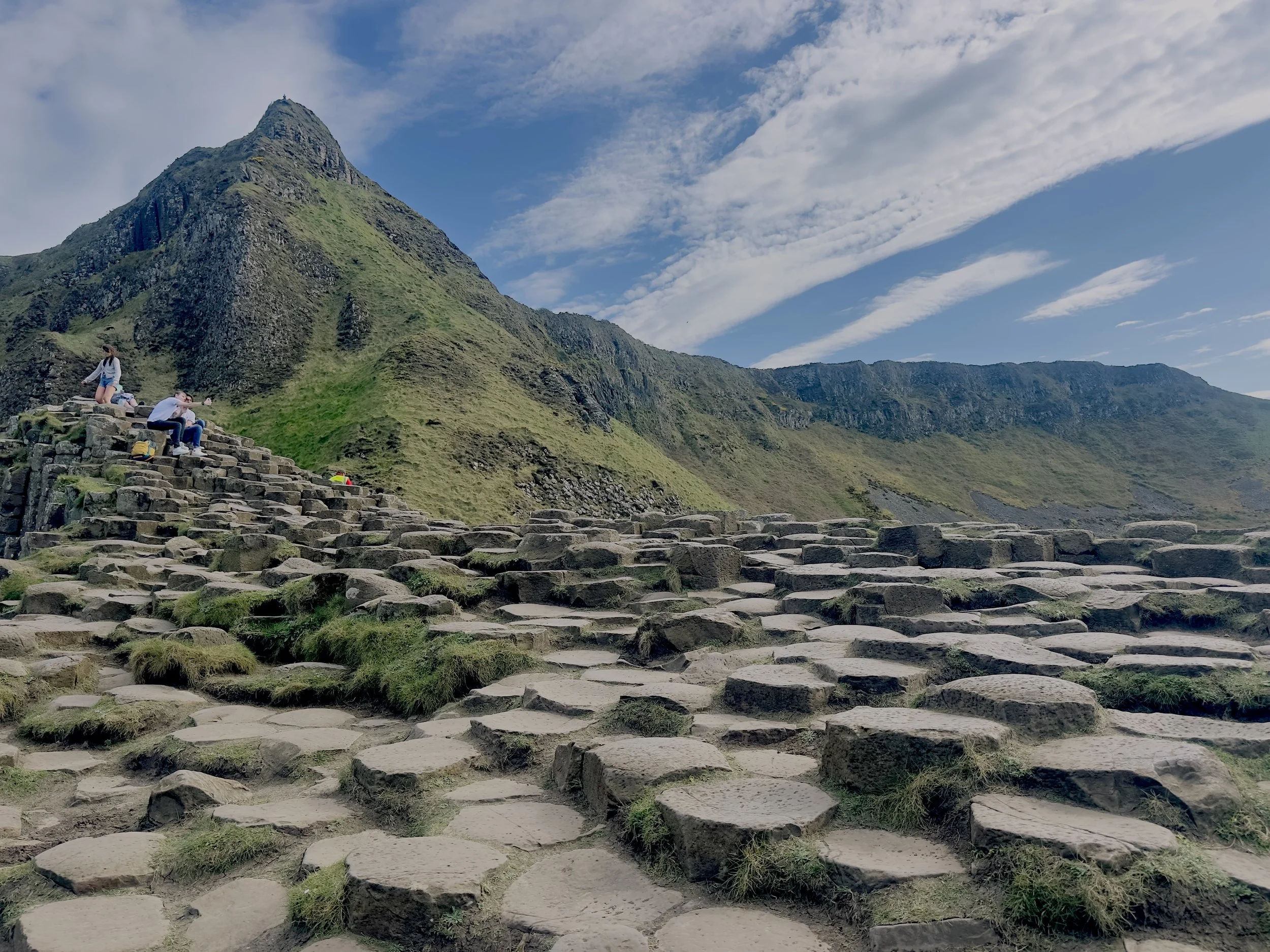
Our final destination for the day was the Giant’s Causeway, a geological phenomenon that defies simple description. Stepping onto those 40,000 interlocking black basalt columns felt like walking onto the playground of the gods. The geometry is so precise, hexagonal pillars formed by ancient volcanic activity rising at varying heights, that it feels as if the gods were playing a game of stones. The sight was stunning as we arrived in the late afternoon, as the sun illuminated the salt spray that coats the dark stone.
On our way back to her home, we talked about our past and laughed, remembering the songs we sang as hopeful teens in the hills of Panchgani, India. The Irish countryside so mirrored those hills that the songs of our youth felt perfectly suited for the moment. As little Gabriel eventually succumbed to the swaying of the road and fell fast asleep in the back, Veronica and I broke into song, singing one song after another of our youth. In that quiet, with only the sound of the wind, our voices, still carrying the spark of our youth, filled the car: “So turn that wall into a bridge, take your brothers by the hand, and walk across that bridge to the world God promised man. We are building bridges over the walls that keep us apart.” So appropriate for Ireland.
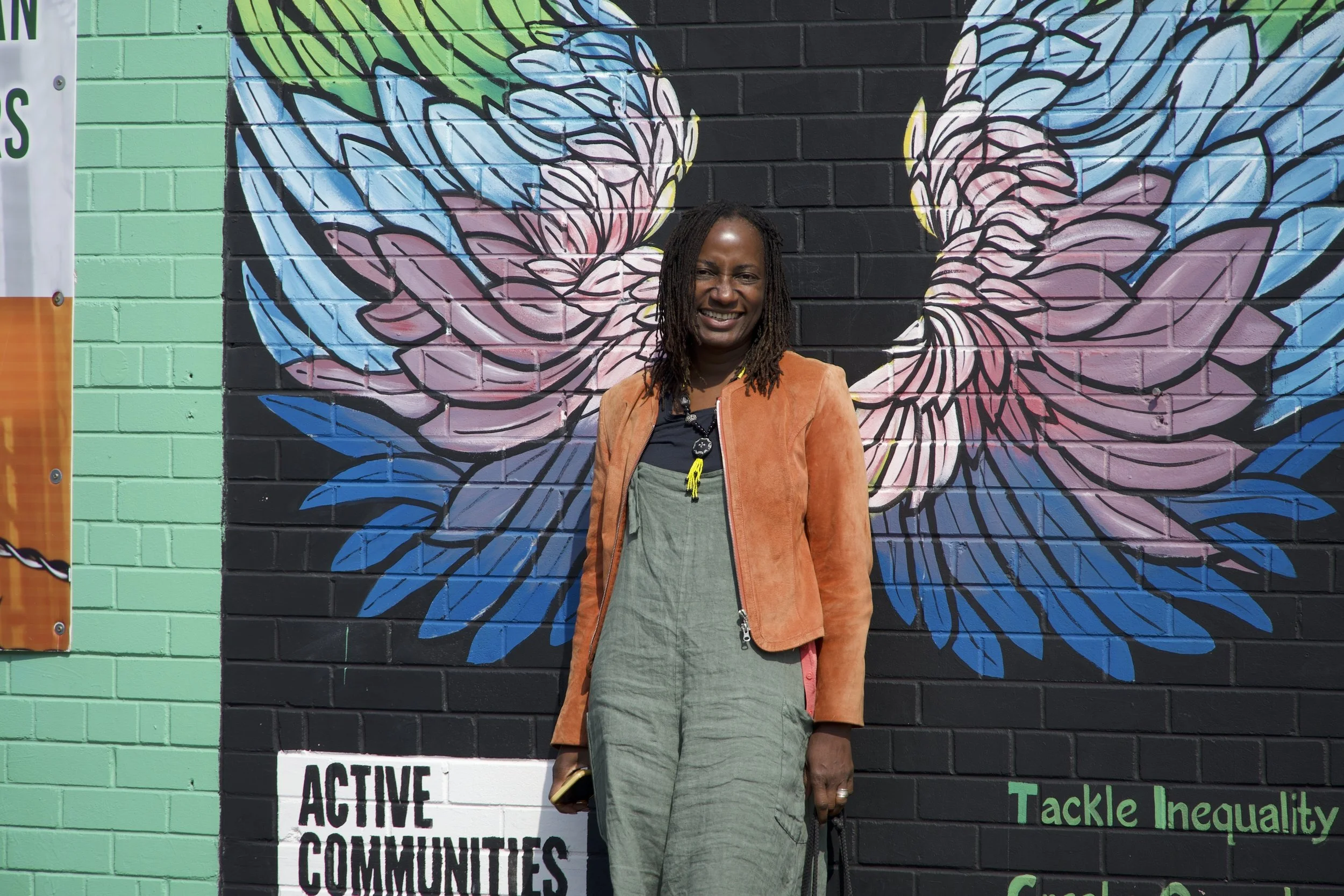
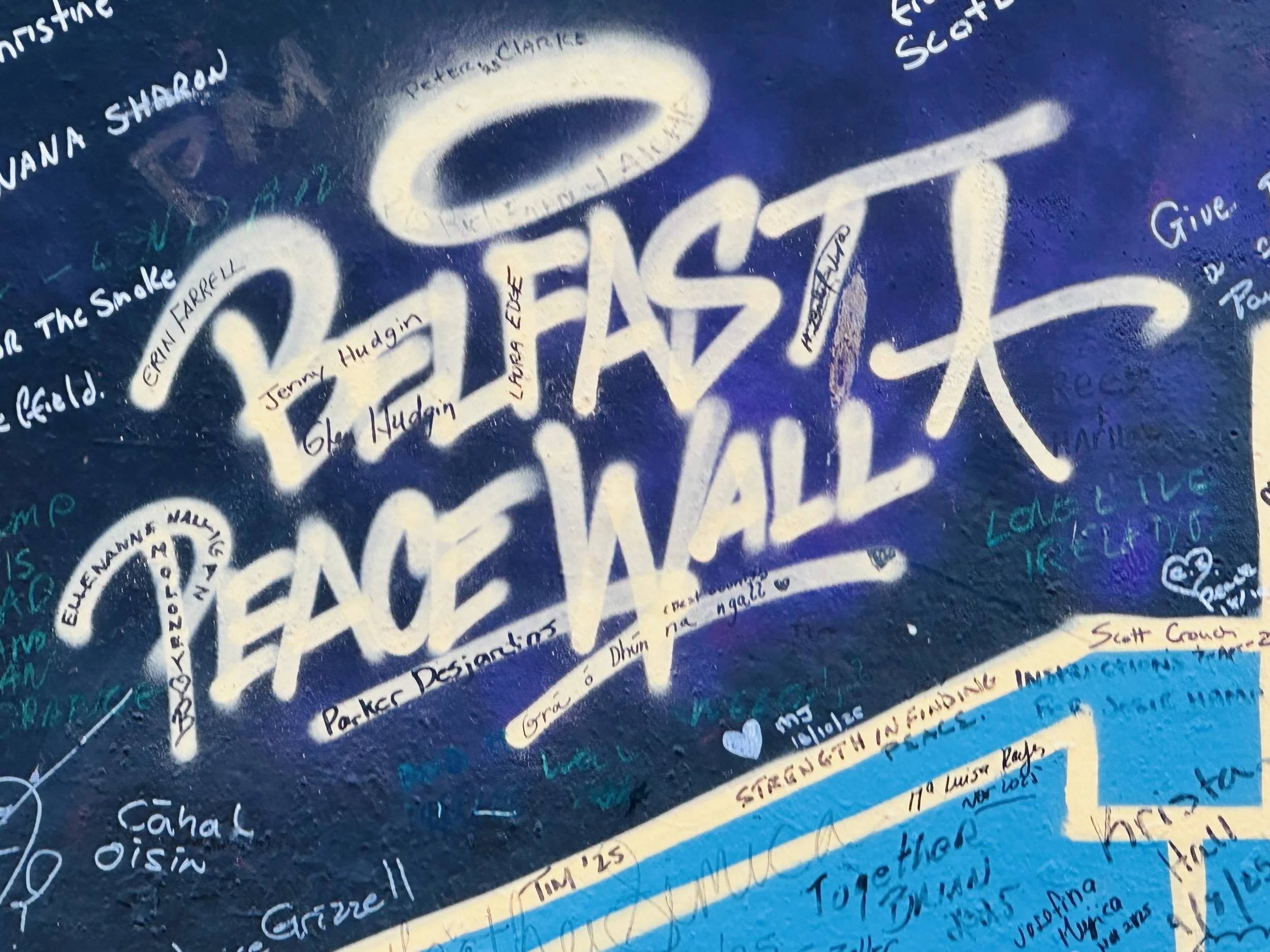
The following day we visited Belfast, where Veronica drove me through both sides of the sectarian divide. The Peace Walls stand in stark contrast to the beauty of the Glens, reflecting a long history of inequality. Yet, amidst the brick terraces, a cry for hope persists in the words of peace plastered across the concrete blocks, marks left by people from all over the world. I found myself wondering about the efforts to bridge these divides, which led me to the Integrated Education movement in Northern Ireland. This vital initiative brings Catholic and Protestant children together in the same classrooms, teaching them to be agents of their own change. It reminded me so much of Veronica’s own work, birthing a grassroots project to empower her community toward oneness through art and community building, much like the work I am doing in Peekskill. Change does not involve doing for people, but giving them the tools to be agents of their own destiny.
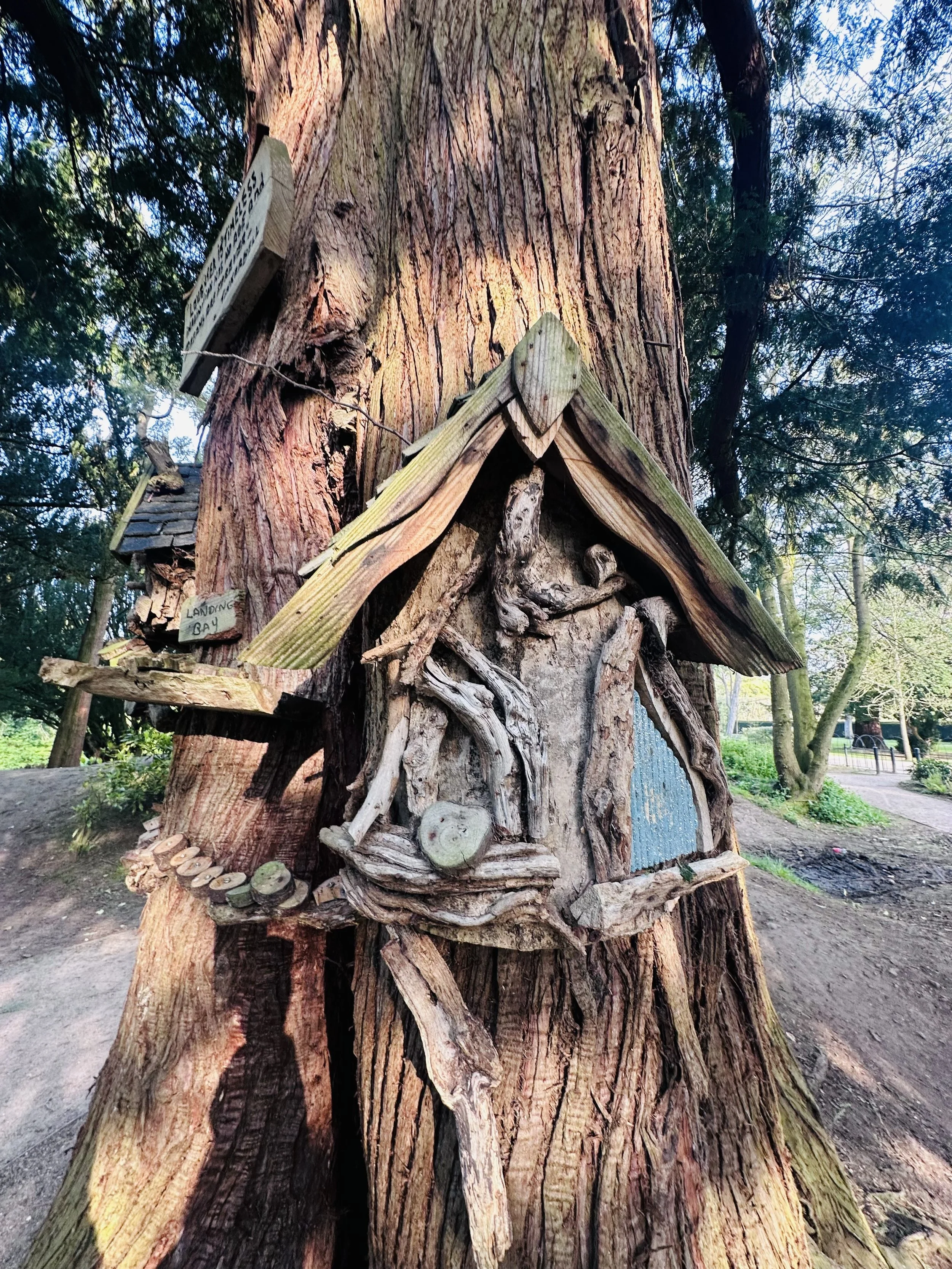
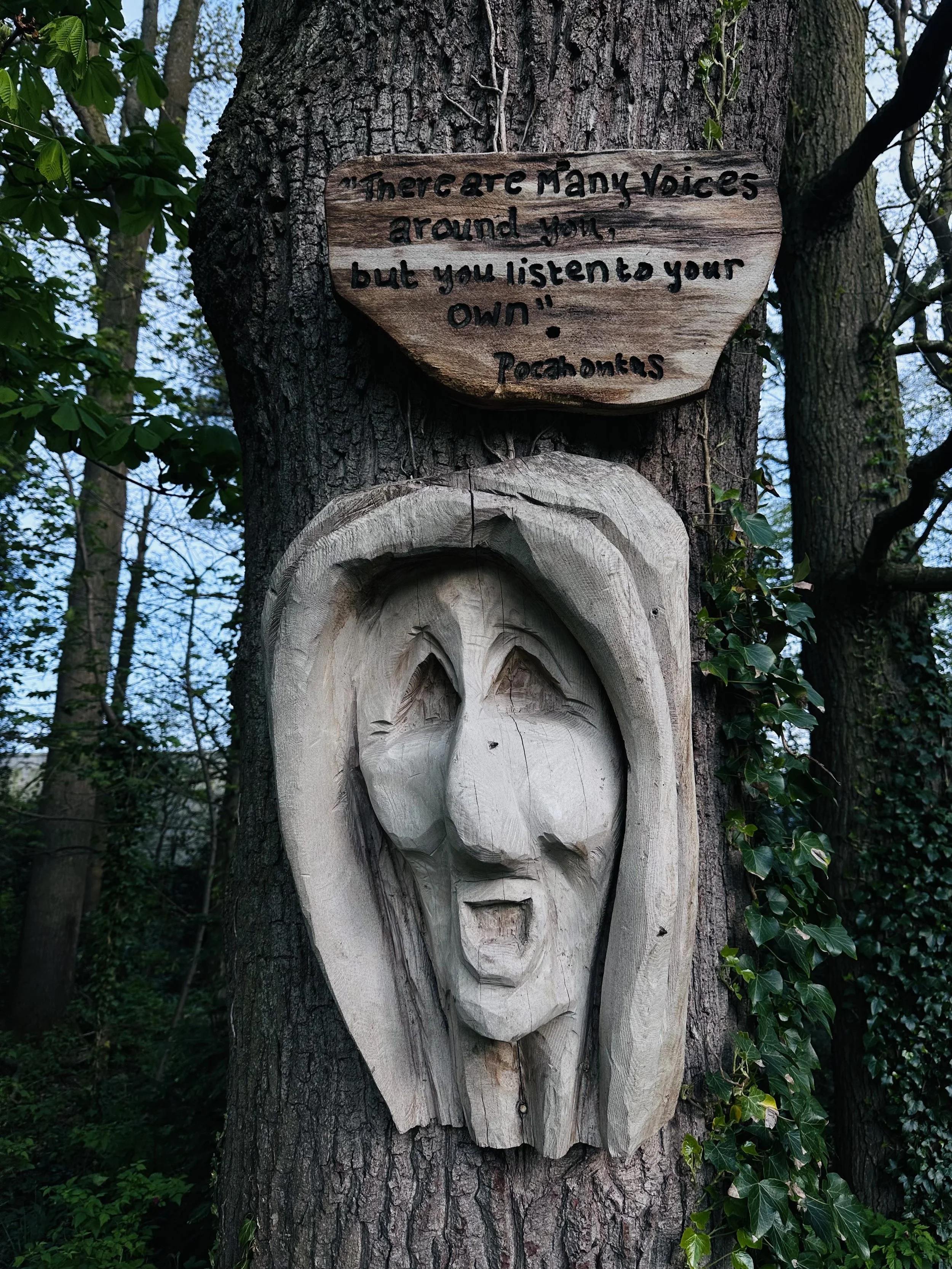
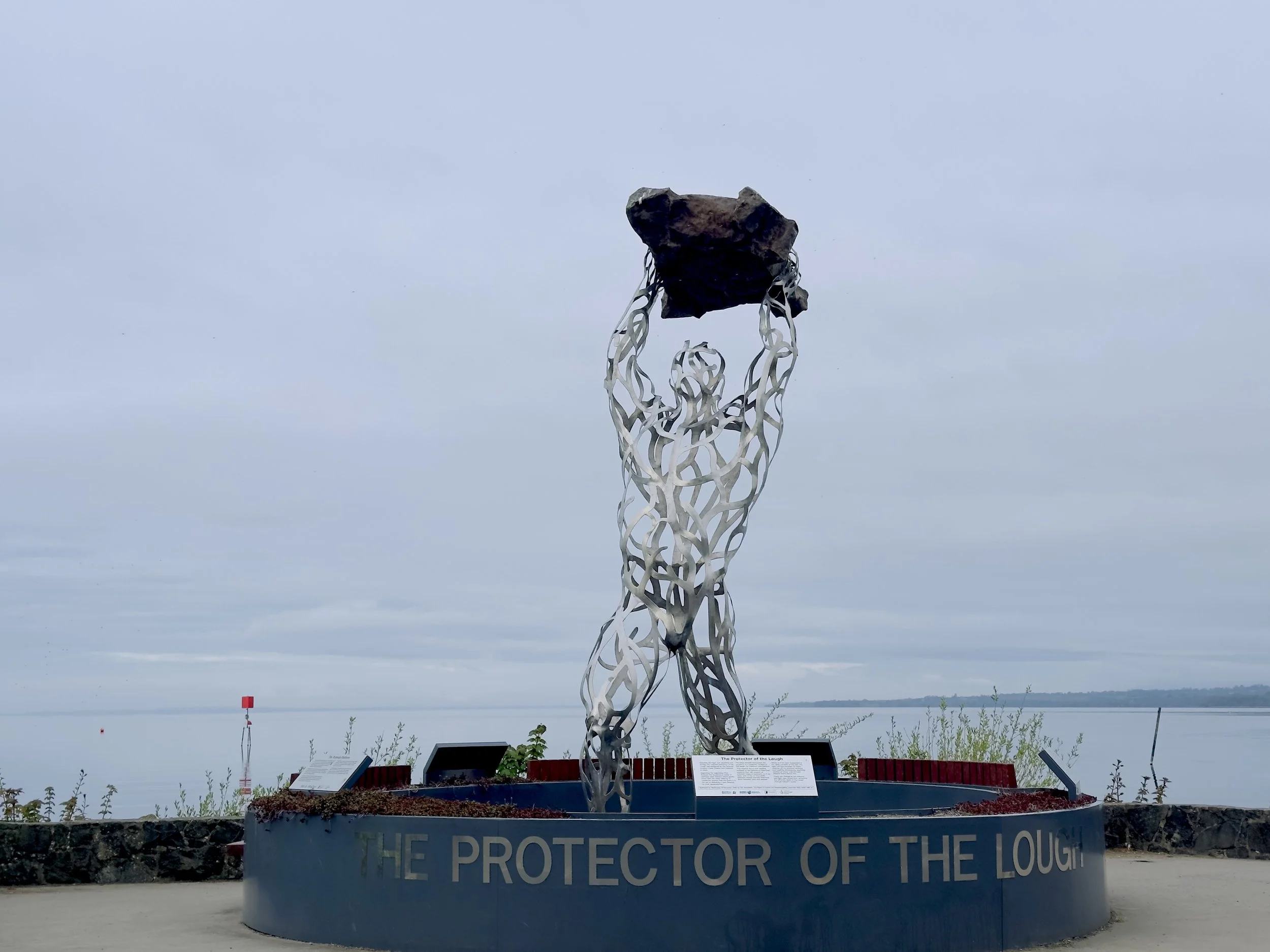
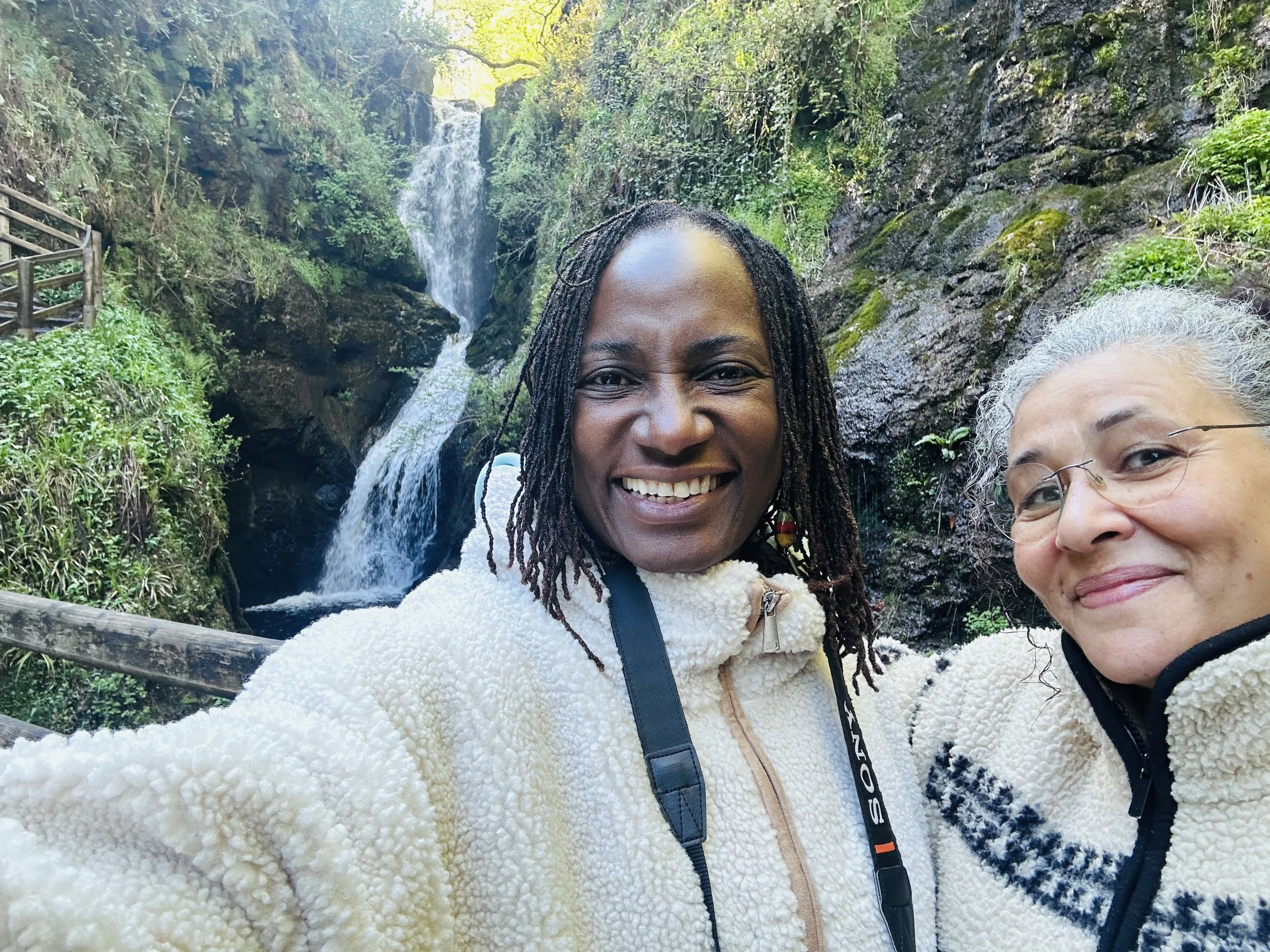
The rest of my stay included daily walks in the Antrim Castle Gardens, a magical place where 400 years of history are preserved. I marveled at the "Living Tree" sculptures—intricate carvings of woodland creatures and spirits directly into the bark of the trees. I walked through the vibrant Parterre garden, where tulips bloomed in precise, colorful patterns, down to the shores of Lough Neagh, where I beheld the statue of the Protector of the Lough, the giant Finn McCool. Legend has it that Finn scooped up a piece of the earth to throw at a rival in Scotland; the hole he left became Lough Neagh, and the lump of earth he threw became the Isle of Man. On my last day in Antrim County, we visited the Glenariff Forest Park, where the Queen of the Glens revealed her waterfalls. We walked the path, watching the white water of the Ess-na-Laragh and Ess-na-Crub falls tumble over ancient rocks, the mist cooling us down.
We celebrated Gabriel’s 4th birthday with Veronica’s family with a feast of Persian food and a cake Gabriel helped bake. The realization that one of the family cats was named Ziggy—the same as my daughter’s cat at home—gave us chills. We marveled at the strange little connections I had experienced throughout this journey. During my visit, I had the pleasure of meeting with Veronica’s friends, and our topics always returned to how we must intentionally work towards healing our communities. It struck me that I am fortunate to have friends throughout the world who are inspiring change.
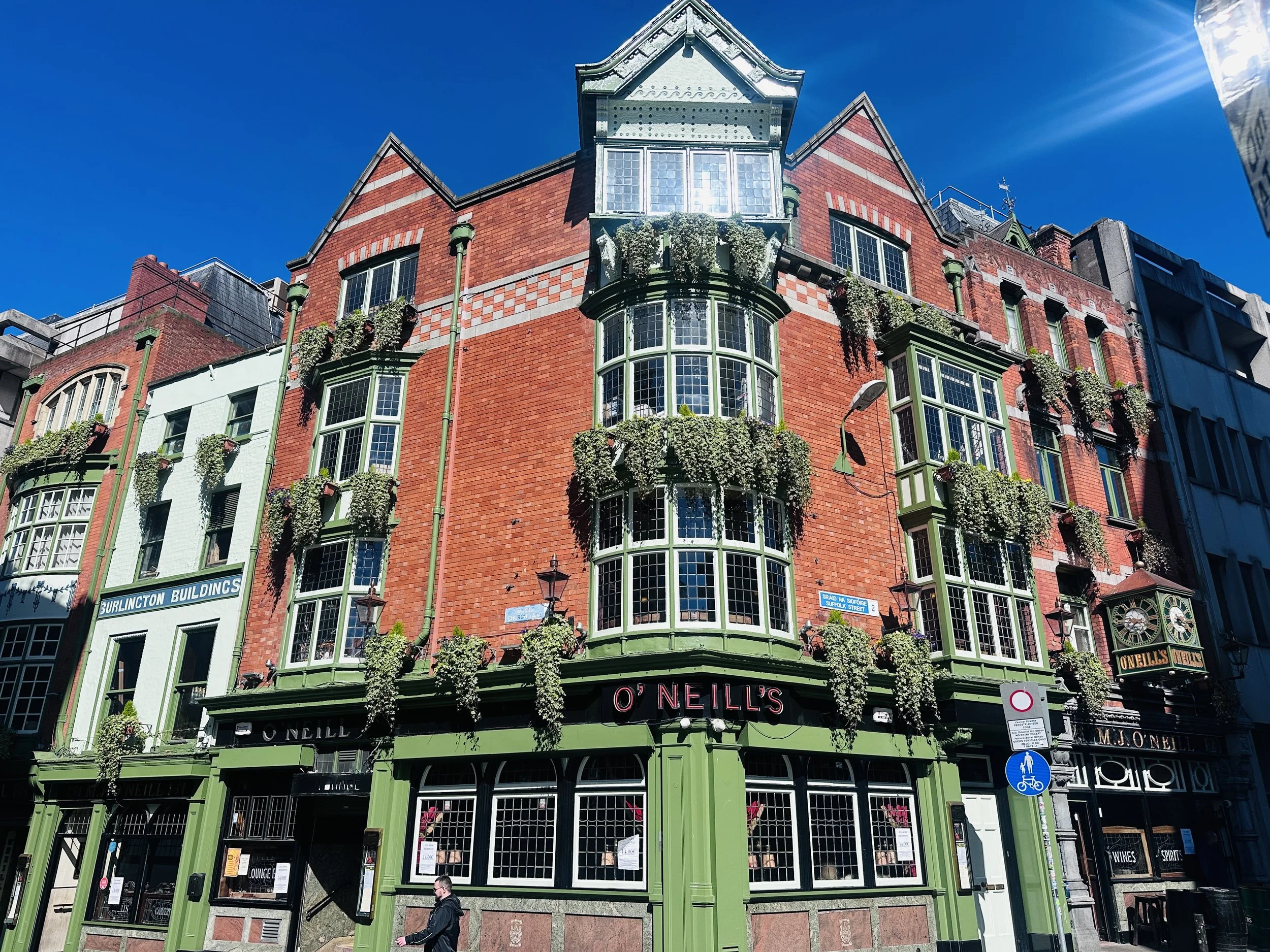
The day before my departure from Ireland, I journeyed by train to Dublin, watching the whitewashed cottages, stone homes, and beautiful countryside. Dublin felt different: a nation expressing itself rather than history still being negotiated. I only had one afternoon in Dublin, so as recommended by Veronica, I visited the Book of Kells at Trinity College. It was breathtaking! Seeing thousands of ancient books in the Long Room preserved with such care brought me a quiet joy. In an age of digital noise, I still treasure the physical act of turning a page. It felt like a small victory in the battle to slow down.
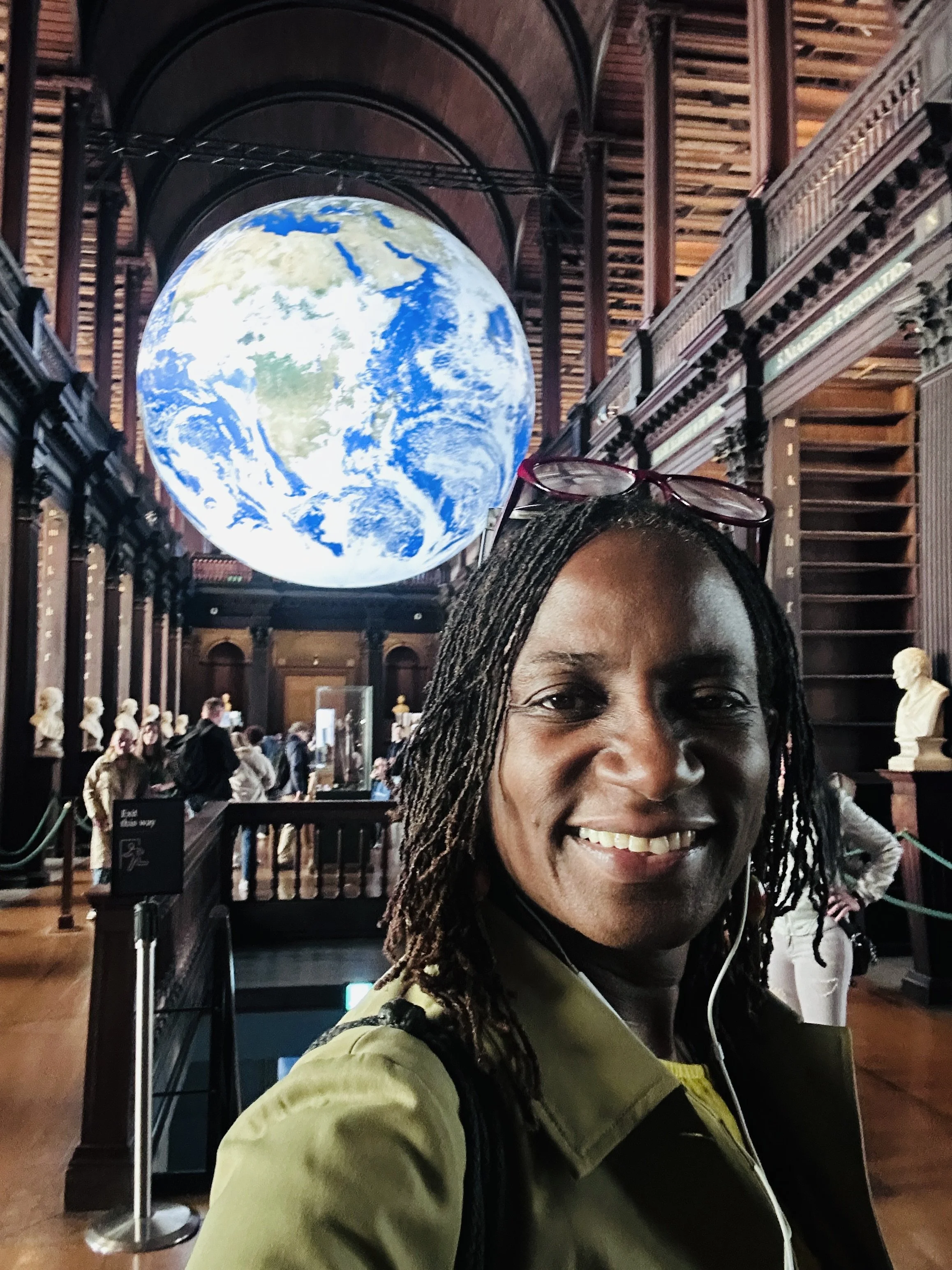
The next day, I boarded a plane to Seattle, Washington, back to the United States after a two-month hiatus traveling the world. Eight countries, 15 cities/towns/villages, and a heart filled with hope.
I left Ireland unsure of many things, but certain of one: the human race is still one race struggling to find itself. Whether in the hills of India or the glens of Antrim, most of us are all just trying to find our way back to each other, building bridges out of the walls that keep us apart. My trip to Ireland, like much of this sabbatical journey, was a reminder that while walls are built by history, bridges are built by shared humanity.
Thanks for reading. Subscribe, comment, and share.