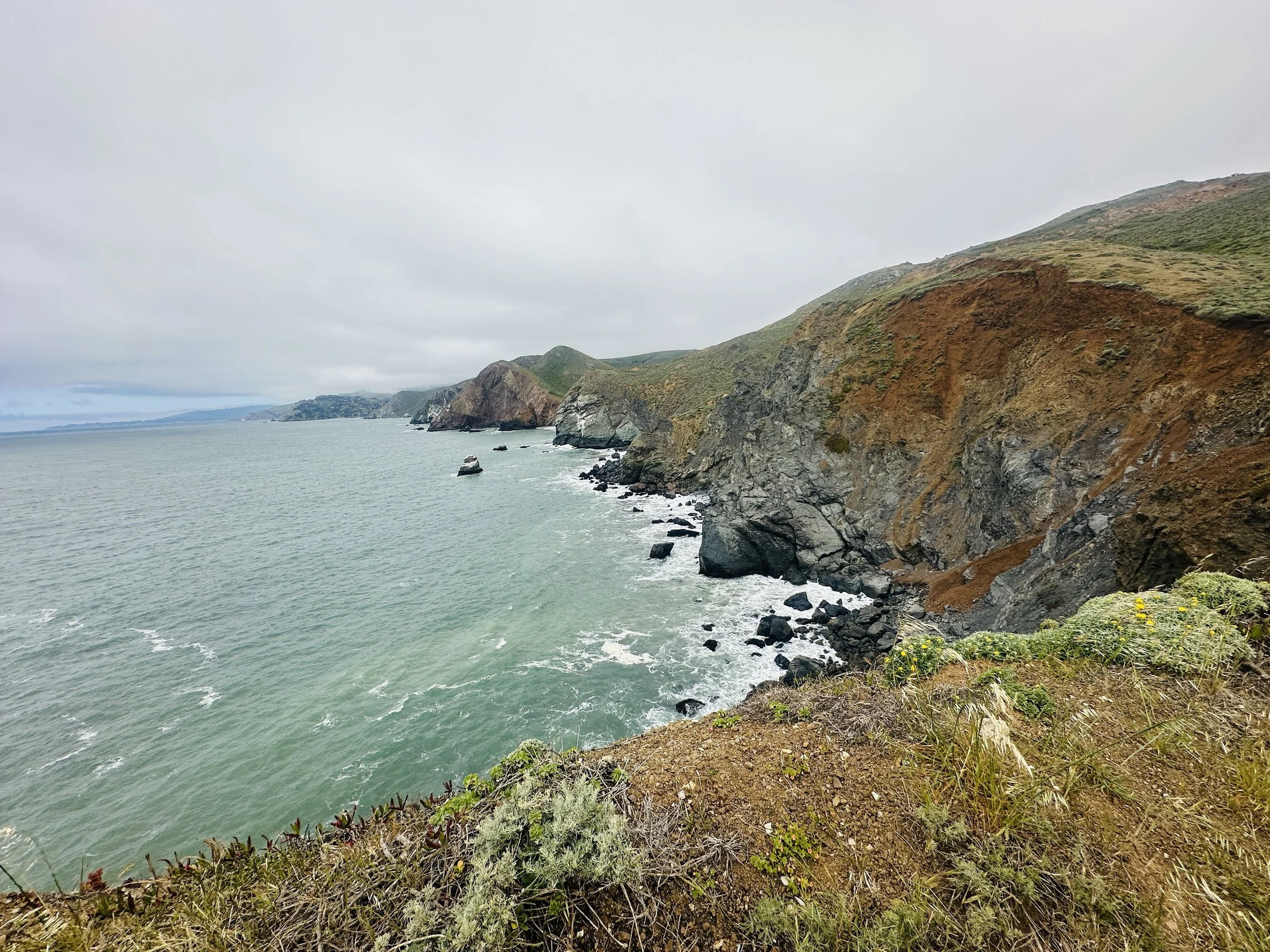
It has been a lifelong dream to travel the West Coast, tracing the edge of the continent from Seattle to San Diego. I’d heard stories of Route 101: the winding roads where mountains meet the ocean, the towering majesty of the redwood forests, and the quiet beauty of coastal towns. When the opportunity for a sabbatical arrived, I knew a West Coast drive had to be part of my journey. After a week in Seattle visiting the Mona Foundation, Eric and I set off on a breathtaking journey south. We knew our destination, but our daily itinerary was unwritten; we planned as we went, often booking hotels only a few hours before we needed a place to rest our heads.
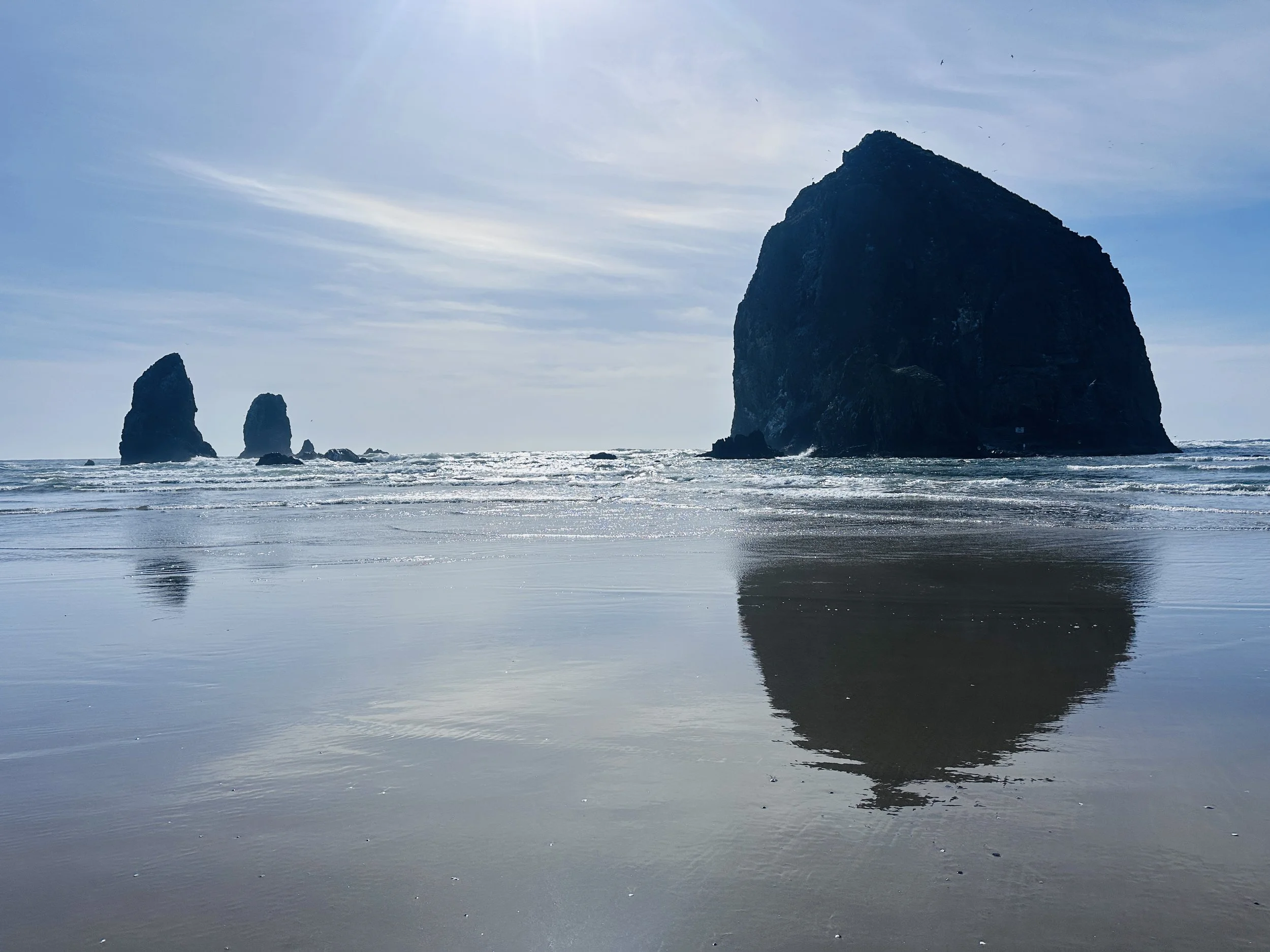
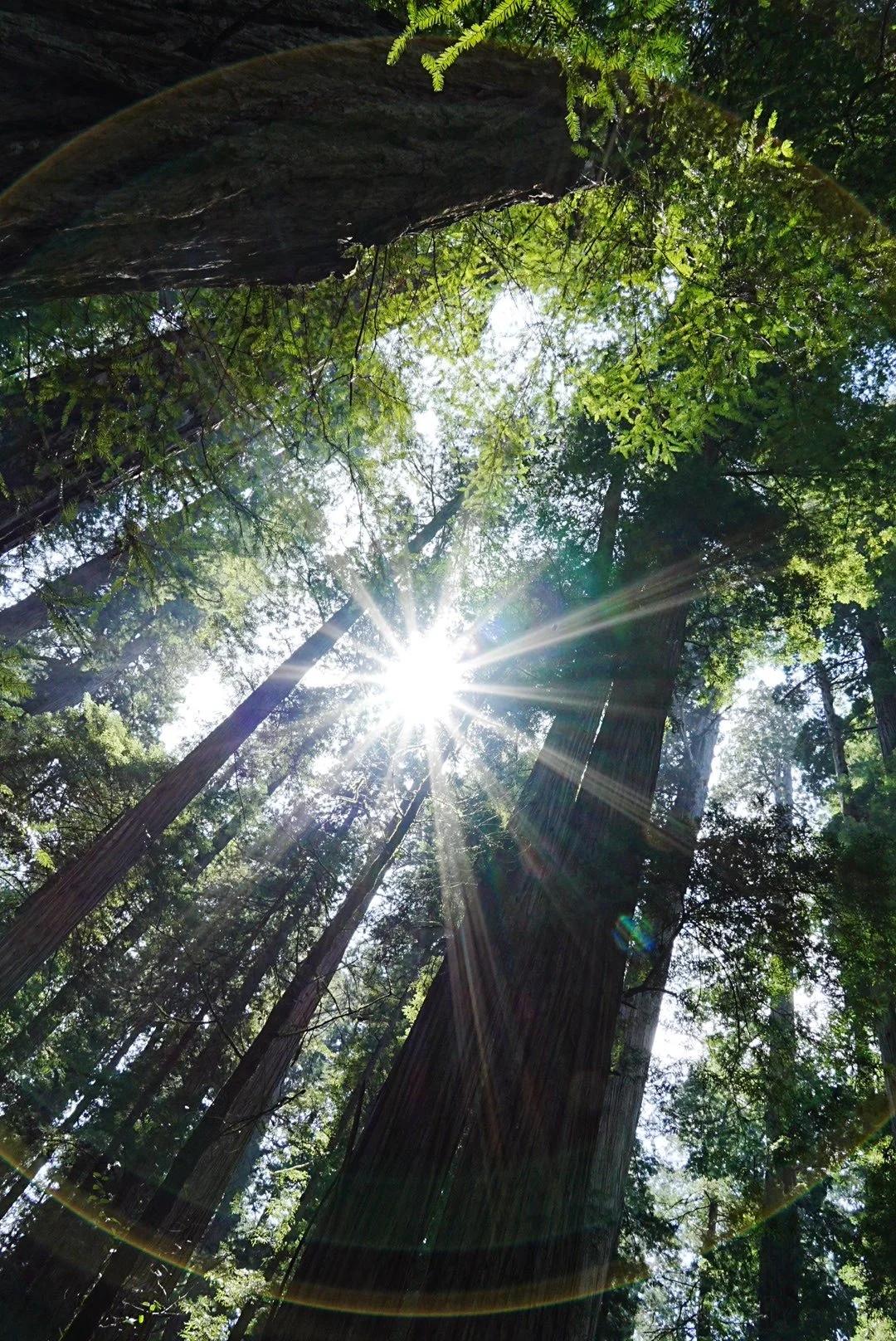
Our first stop was Cannon Beach. We found a hotel by the shore, a mile’s walk from the famous, towering rock stack that defines the coastline. From there, we made our way to Crescent City, just a few miles from Jedediah Smith Redwoods State Park. Walking and driving through those ancient groves, the feeling of intense awe and wonder overcomes you. You are small, moving through a stillness of giants that has existed for centuries, in a section rightfully called the Avenue of the Titans. These trees tower over us, reaching heights of 367 feet, some as old as 2,000 years. Many adjectives describe the redwoods, but two that come to my mind are steadfast and patient. I am faced with the thought that time is fleeting, yet these trees have stood in silence for centuries, witnessing change after change while faithfully cleansing the air we breathe. Tragically, only 5% of the original, old-growth coast redwood forest remains today, primarily because humans have cut them down over time. As I stand there and read those words, my heart aches.
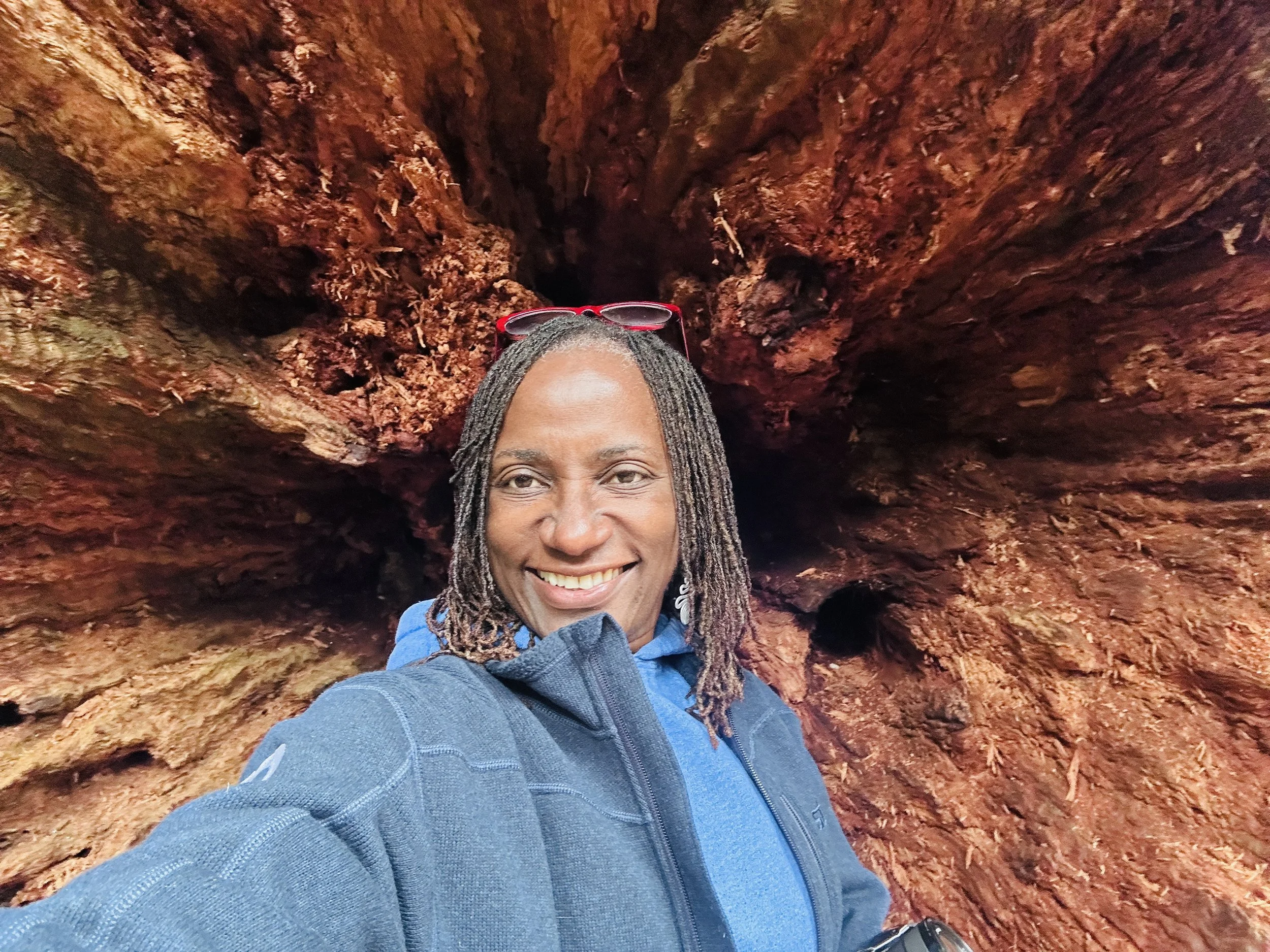
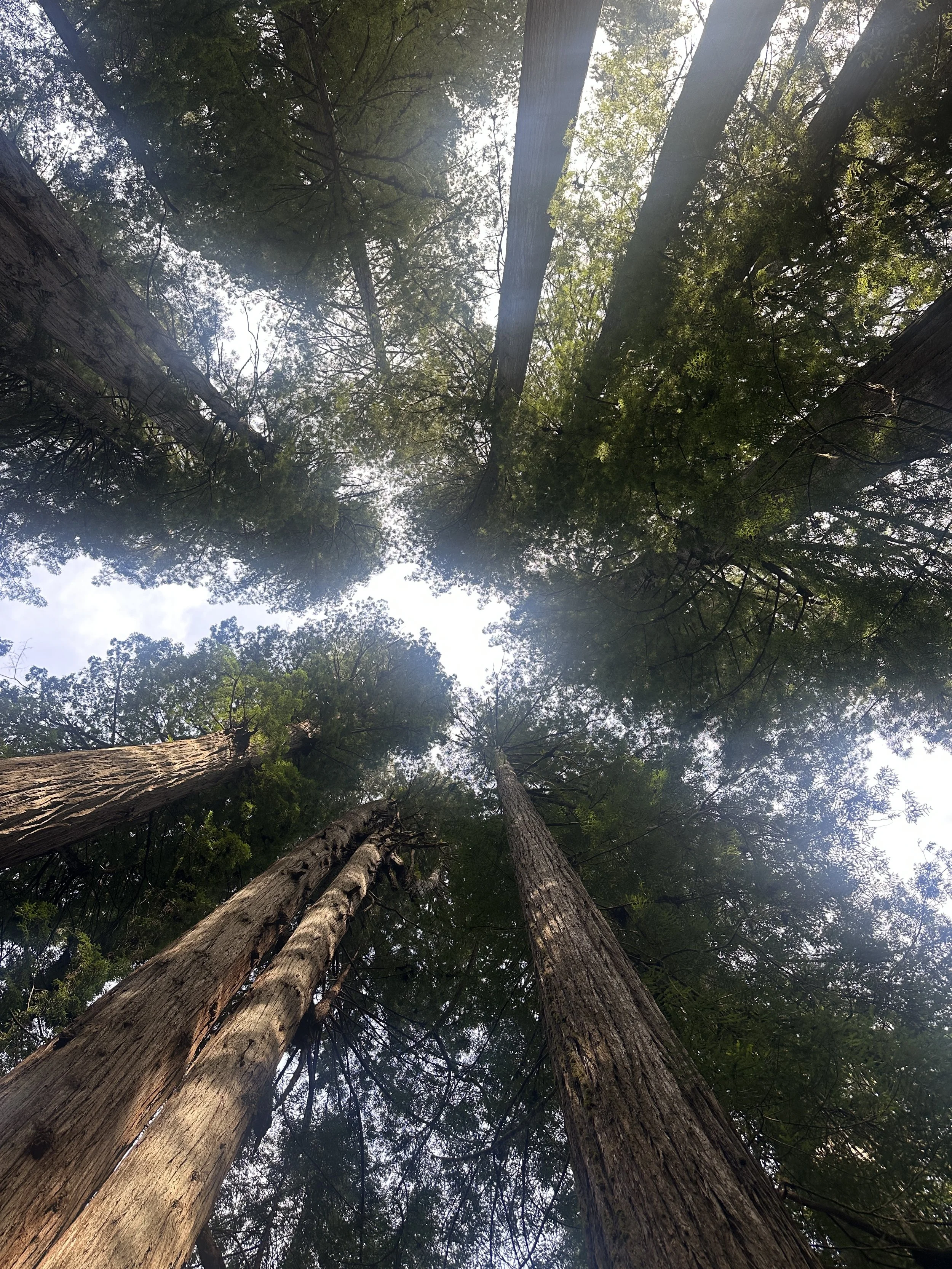
Among their many benefits, redwoods are the best trees for carbon sequestration; they combat climate change more effectively than any other ecosystem on Earth. They provide vital benefits to human life and regional survival, such as pulling moisture from the air to feed local streams and providing a microclimate for hundreds of species of plants and animals. The benefits are far more than I can pen down, yet we humans may very well be the cause of our own demise. By harming these trees, we harm ourselves. Fortunately, the remaining redwoods are protected under the National Parks system—like museums that we visit in droves to take selfies and admire. I hope as people read the stories placed on the placards, we leave moved to be mindful of the choices we make and the causes we choose to stand for.
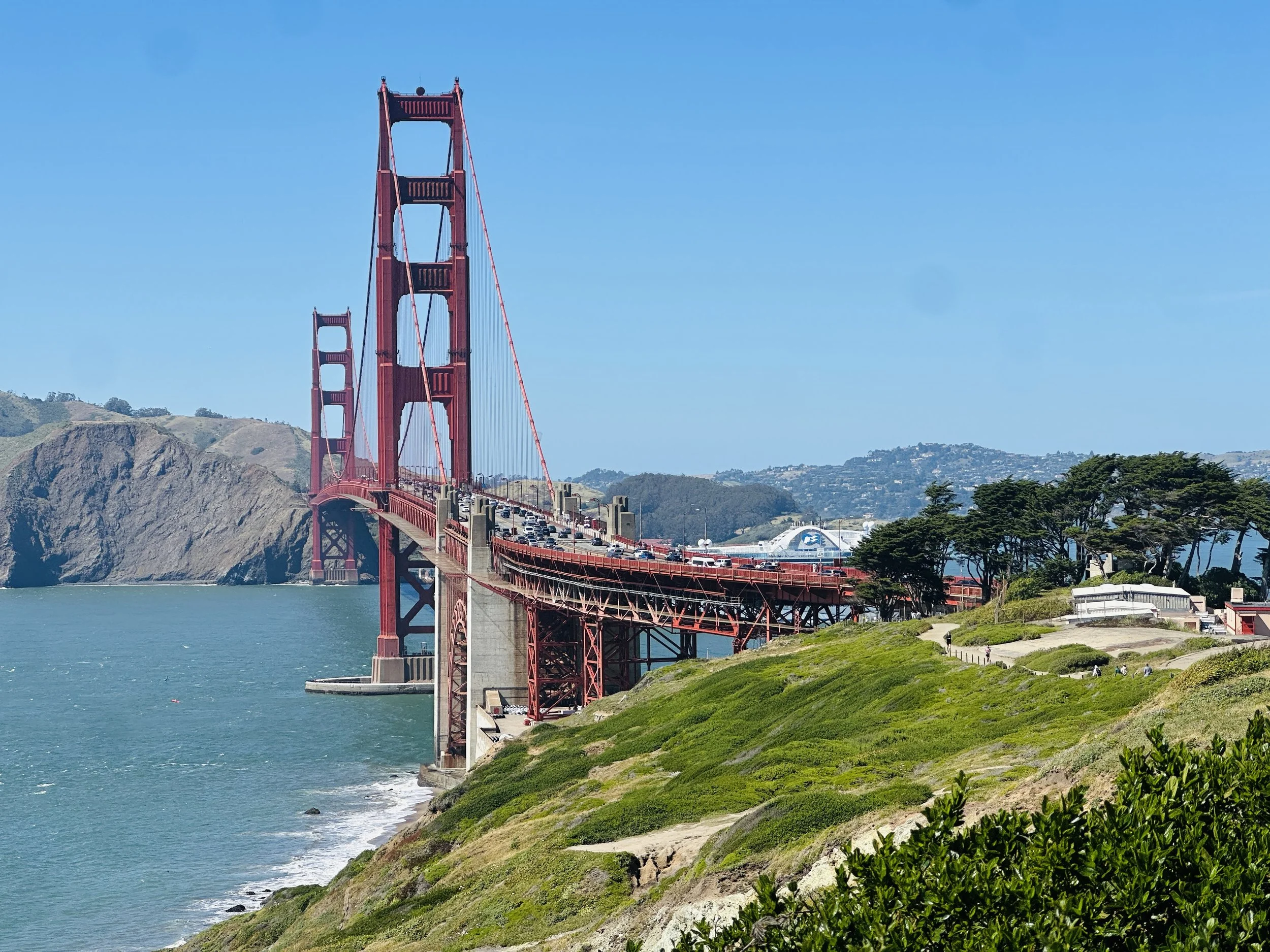
From the silence of the trees, we traveled toward the vibrant energy of San Francisco. There, I reunited with my dear friend Nehal, whom I had not seen in thirty years. We attended high school together in India, Panchgani, India. Youths with big dreams, and here we were, picking up exactly where we left off, silly and loving each other. We hiked together just as we did in our youth; it was a feeling that time had stood still, waiting for us to reunite. I also met with Badi, another dear friend from the same school, and experienced a similar feeling. He was kind enough to share his love for the area by showing us the hidden corners of San Francisco and the Golden Gate Bridge from secret vantage points that tourists rarely find. While Nehal showed me the mountains and protected green spaces just outside the city, Badi shared the beautiful urban spaces he loved within it.
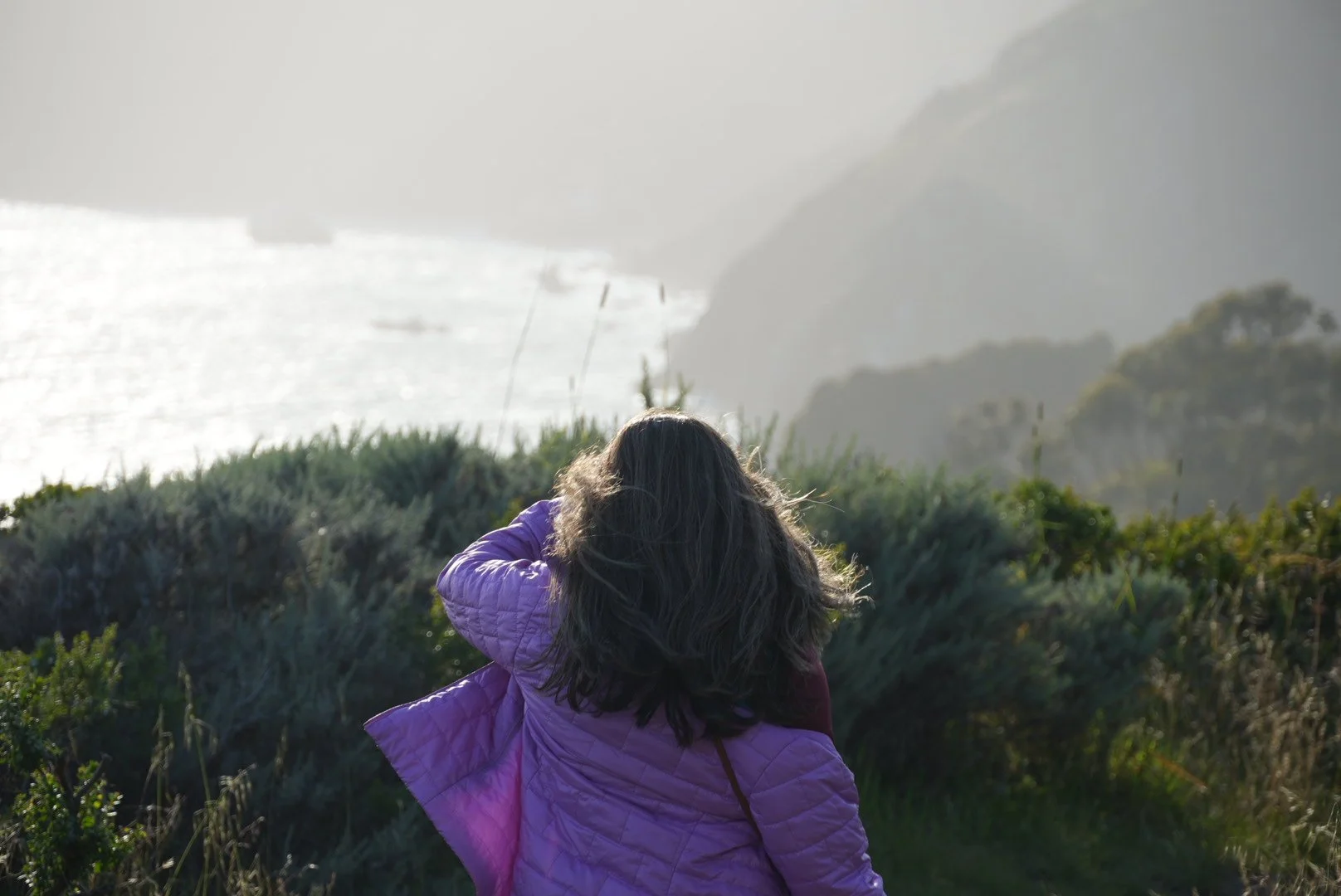
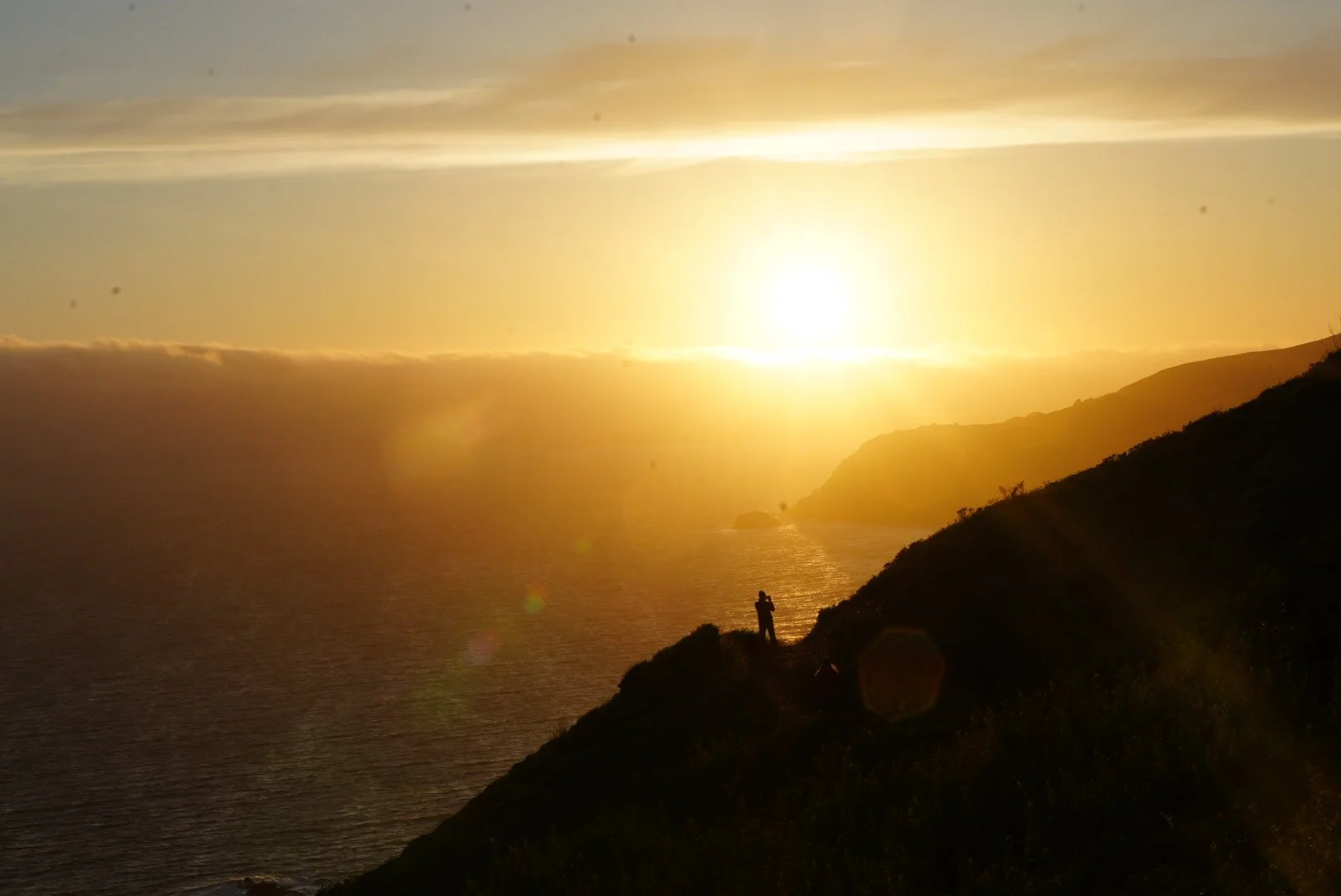
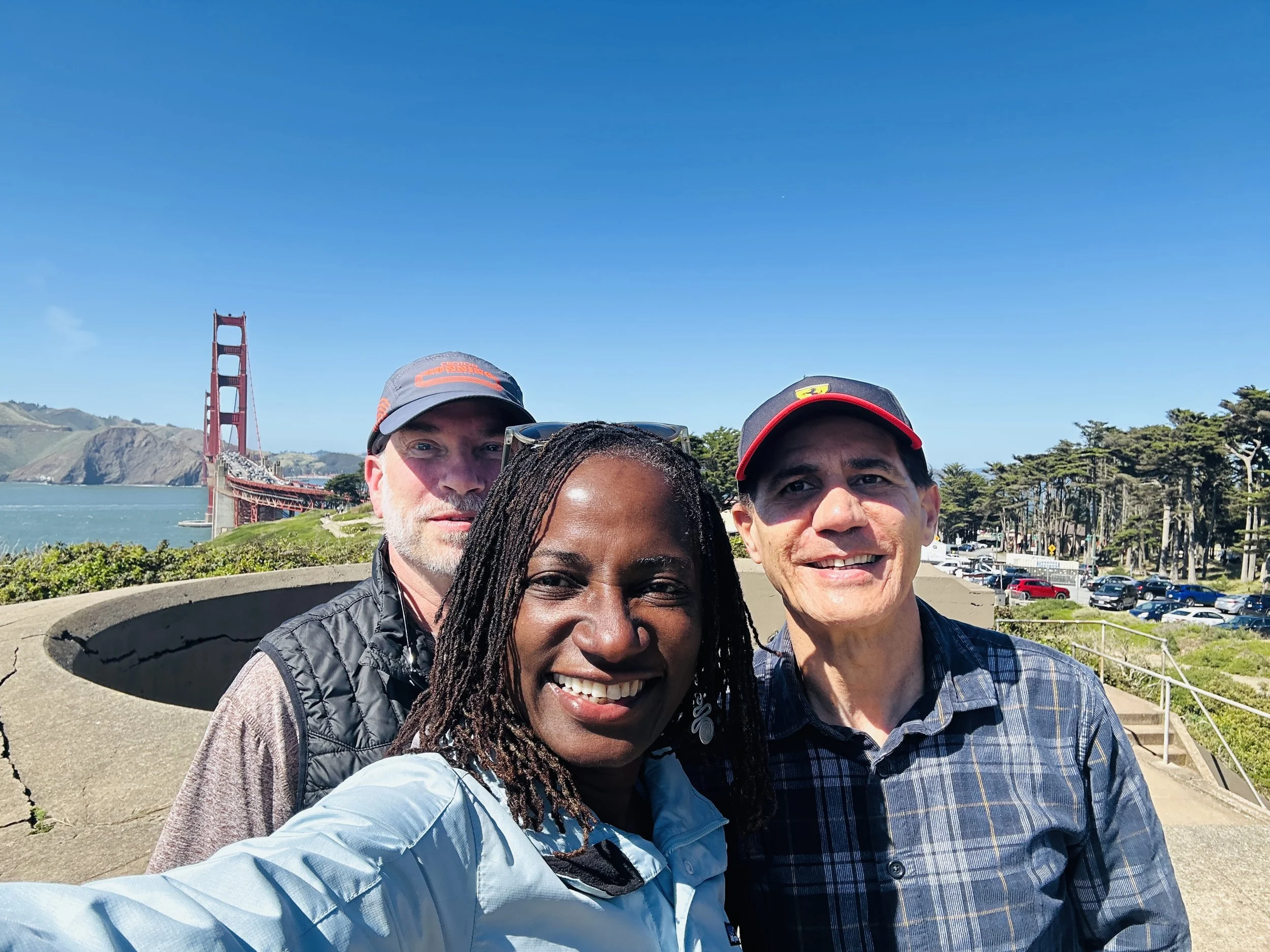
After bidding my friends goodbye and promising not to let another thirty years slip away, we made our way further south. We wound through the 17-Mile Drive, where the Lone Cypress stands patented and perched above the Pacific. I couldn’t help but wonder how a tree, a gift from nature, could be patented. We passed Carmel and drove through Big Sur, where the mountains drop straight into the sea. The feeling of awe was overwhelming; what a beautiful planet we live on. Somewhere along that stretch of road, I became emotional. It felt as if this journey, though curated by myself, had been gifted to me for a deeper purpose. Seeing America this way felt like a final frontier of sorts.
We made our way to Carpinteria, a quaint Southern California beach town tucked off Highway 101 between Los Angeles and Santa Barbara. It is a place where time seems to slow down, defined by a laid-back surf culture and beautiful coastal landscapes. On our morning walk, tea and coffee in hand, we noticed how everyone smiled and wished us good morning.
We finally made our way through LA, stopping to reunite with another friend for lunch in Santa Monica, before arriving in San Diego in the early evening. I marveled at the six lane highways filled with cars moving bumper to bumper, a journey that should have taken an hour and half, took three hours. Our final days was spent just outside the city in La Jolla. We visited with two friends I hadn't seen in years and their young, growing families. We explored the Sunday farmer’s market in Encinitas and walked through the Self-Realization Fellowship Meditation Gardens. Perched on a cliff with winding paths and exotic flora, the gardens are designed to facilitate deep contemplation. I sat there looking at the ocean, breathing the clean air, and was once again overcome with gratitude for this gift of self-reflection.
The beauty of the landscape throughout this drive was often met with the sharp reality of the injustices our systems have perpetuated. I saw quaint towns in Oregon that felt deserted, followed by areas so pristine and lavish they caused a pang of pain. In a country where homes are worth millions of dollars, there is a growing population of homelessness at their very doorsteps. This disparity is alarming and very obvious on the West Coast. My friends who are renting joked about how a house that looked like a chicken coop and needed a complete remodel was asking 1.3 million dollars. We talked about how challenging it will be for our children to afford anything. If one isn't born into wealth, how are they supposed to make it when the cost of university is beyond affordability and home prices rise far faster than wages? It is a sad realization that felt more jarring on the West Coast.
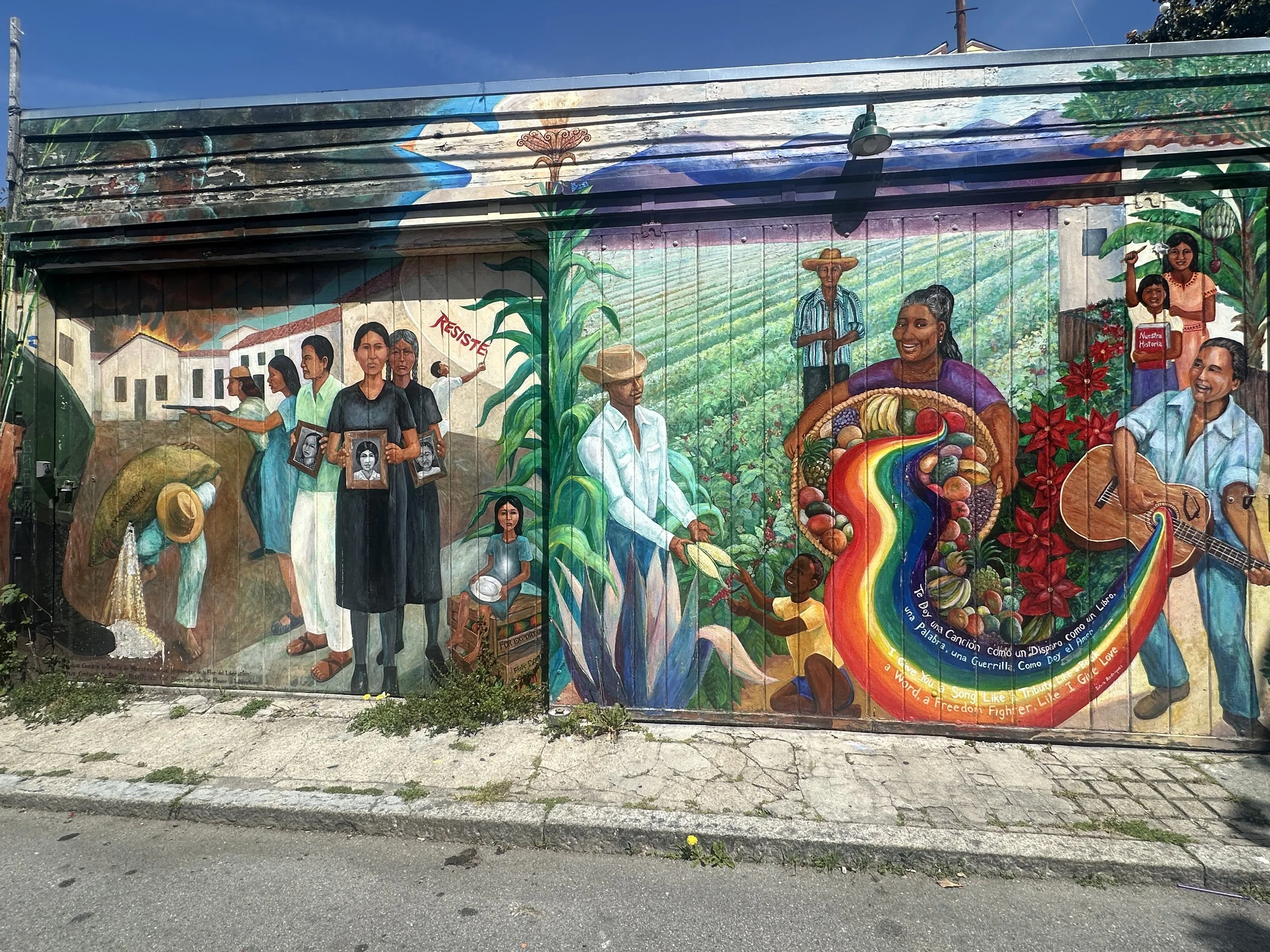
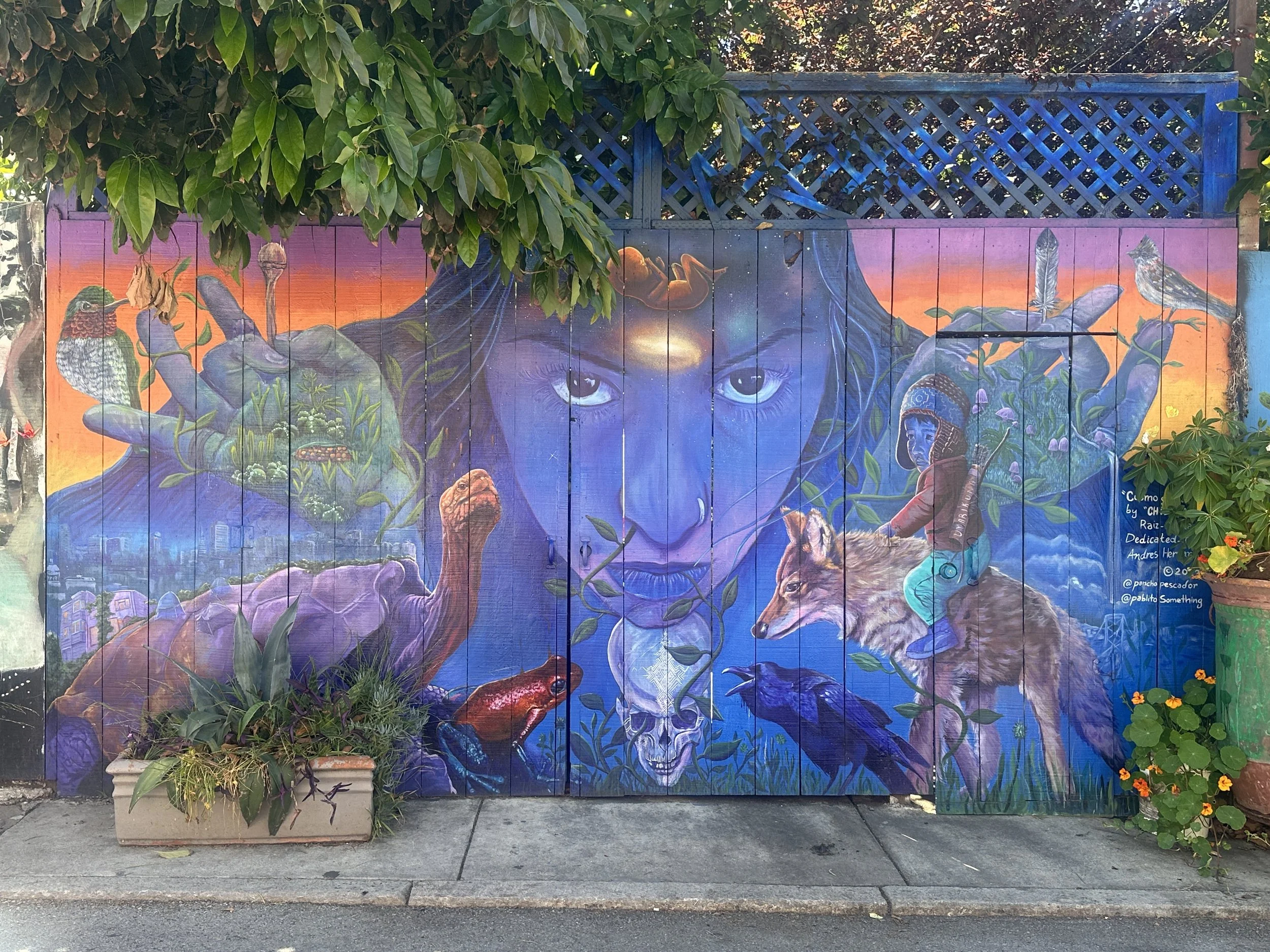
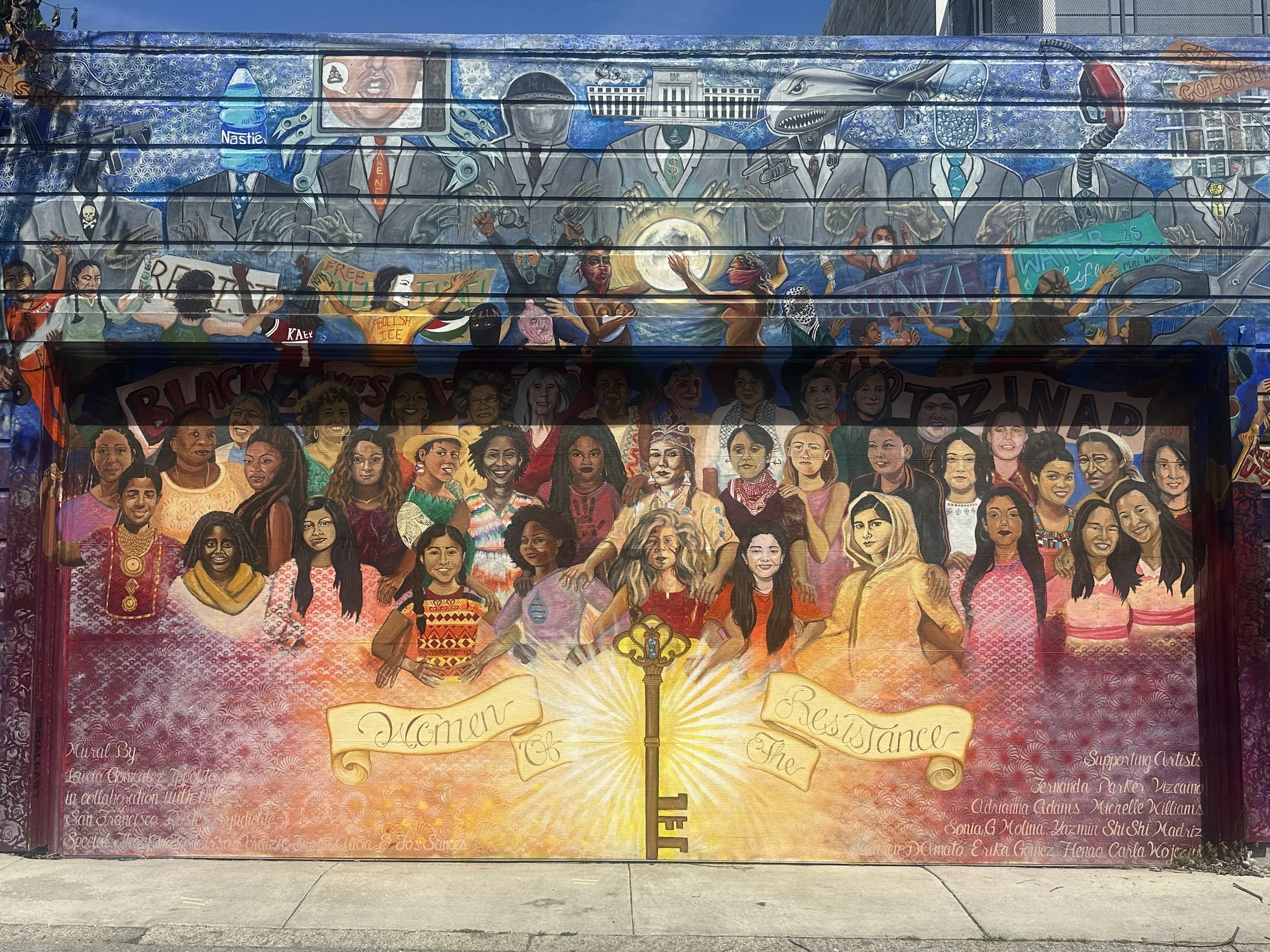
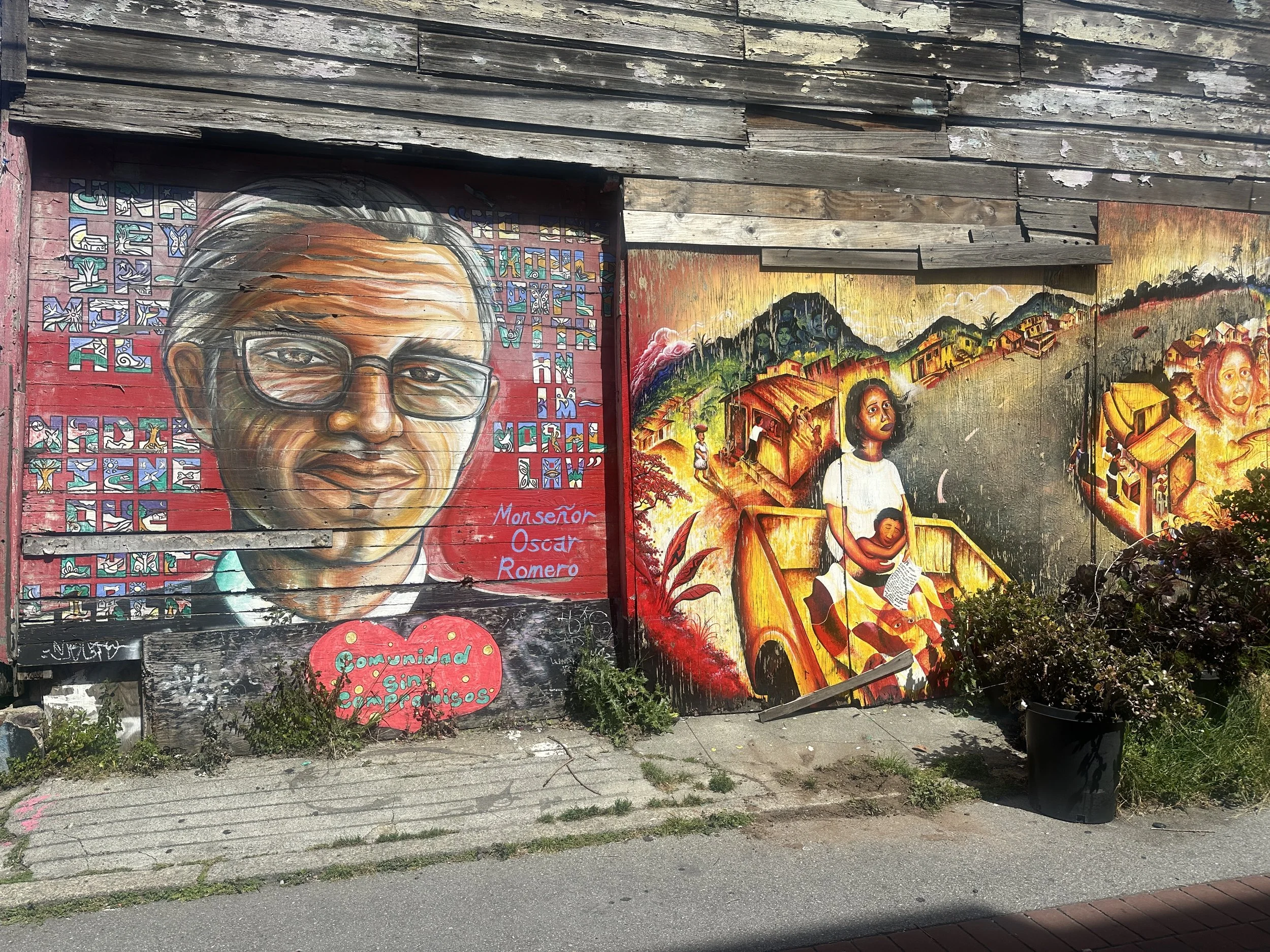
The drive was truly a gift, yet between the plight of the redwoods and the growing population of homeless people, it was also a source of grief. In San Fransisco we witnessed the despair of the people reflected on the walls in the Mission District. Strikingly beautiful murals calling us to pay attention to do something. The answers seem complex, yet I believe we have it within us to examine these problems and look for solutions, but only if we recognize each other’s humanity and how all life is connected. I am reminded of a quote by Baha’u’llah as I drive past the unhoused:
“O Ye Rich Ones On Earth! The poor in your midst are My trust; guard ye My trust, and be not intent only on your own ease."
I wonder what it would look like if we took those words to heart, or if we heeded the words of author Michelle Alexander in The New Jim Crow:
“We must learn to care for one another across all boundaries and borders and build a movement of movements rooted in a love so fierce that when a Mexican child is ripped from the arms of his mother at the border, and when a black child is ripped from the arms of her mother as she’s arrested on the streets of New York, and when a white child is ripped from the arms of her mother in a courtroom in Oklahoma, we feel the same pain, the same agony, as though it were our own children.”
I am reminded of the common thread across the countries I have visited during this sabbatical: there are people who care, who are taking these words to heart, and who are doing the work in their communities. Here too, in America, people are noticing and enacting change through the protection of the remaining redwoods, the intentional creation of green spaces in San Francisco, and the work of friends I’ve met on this drive. From the Mona Foundation’s mission to eradicate poverty through education, to my friend Nehal seeking solutions for the planet through space technology. Jake and his organization, Sown for Good, using film to bring funding to community-led solutions, and Nava, a journalist and producer highlighting the injustices we must address through her podcasts and writing. The tides are shifting and this gives me hope.
I got on the plane from San Diego to Chile hopeful, with a conviction and understanding of what comes next for me. As I move toward the sixth decade of my life, I am ready to begin writing a new chapter, feeling finally that I have the building blocks to do so.
Thank you for reading, and follow me for the final chapters of this sabbatical and the beginning of a new era. You can find me on Medium and Substack.